In today’s food post I will be writing about some of the healthiest foods. For this list we picked the essential super foods that have shown to significantly improve people’s health and well-being. While there are many things that can be incorporated into a healthy diet, this list focuses on things that can be eaten and are readily accessible to most people.
Avocados
Healthier avocado is rich in oleic acid, which lowers the risk of heart and inflammatory diseases. It also enhances the body’s absorption of carotenoids, essential nutrients, found in leafy greens and red or yellow vegetables, add avocado to a salad, and you actually amplify the nutritional value of virtually everything else in the bowl and don’t be afraid of the avocados high fat content.
It’s what makes it creamy delicious and incredibly nutritious, plus it’s good fat number nine kale, while all leafy greens should be part of a healthy diet, including spinach. It’s kale that packs the greatest punch rich in various essential vitamins, a cup of kale actually matches and sometimes surpasses a cup of milk in terms of calcium content. It’s complex chemical composition can help to fight cancer and can actually repair DNA in damaged cells, sauteed or steamed pureed, or boiled this hearty veg its nutritional content, regardless of preparation.
So if you think you don’t like kale, just try preparing it another way: Sweet, potatoes, trumping, even the carrot as a primary source of beta-carotene, the orange fleshed sweet potato, provides a variety of health benefits in one simple to cook easy to eat package. The popular root vegetable helps to balance blood glucose levels, while also raising blood levels of vitamin A essential for maintaining a healthy immune system and eyesight best serve steamed or boiled.
Blue Berries
You can optimize its nutritional benefits by drizzling on a small amount of a healthy fat like olive oil, to enhance your body’s nutrient absorption. Blueberries jam-packed with antioxidants, vitamin C and fiber. This we bury might actually improve memory and slow down or postpone certain cognitive disorders related to aging as fruits go. The blueberry is relatively low in sugar and can help maintain a healthy glycemic level when eaten on a regular basis cheaper and more readily available than the recently lauded goji berry.
The blueberry also maintains its nutritional value when frozen, which means you can reap benefits of this sweet and tangy fruit. All year round number six almonds delicious and versatile. This much-loved nut is actually a seed whose high fat content can satiate a craving while simultaneously improving your overall health almonds are rich in monounsaturated fat, which reduces unhealthy cholesterol levels and lowers the risk of heart disease.
The Almond
A great source of vitamin E, the almond, can help improve overall cardiovascular health and is thought to reduce certain signs of aging want to feel good and maybe even look a little better start snacking on some almonds number five apples. Yes, it’s true an apple a day. Will actually keep the doctor away a good source of vitamin C and soluble fiber Apple’s, improved blood, glucose and cholesterol levels, their antioxidant properties promote the production of collagen, which strengthens veins and capillaries and helps to maintain fresh youthful looking skin a versatile fruit that comes in A variety of types, red, green or gold – this popular snack, has some pretty powerful health benefits.
Salmon
Salmon, rich in b12 vitamin D and with one of the highest concentrations of omega-3 fatty acids of any food wild or organically farmed, is really your best bet when it comes to this fish. Recent studies suggest that eating salmon helped improve cardiovascular functions and might even help to reduce depression and boost learning capabilities, the ultimate brain food when it comes to a healthy diet.
This oily fish is really a no-brainer number three oats. Whole grain. Oats are a great source of soluble fiber and can significantly lower cholesterol, while also preventing heart disease. Some types of breast cancer and colon cancer and sure we know these whole grains might be a little bit boring, but they’re cheap, easy to cook and really really good. For you boost flavor, with a few berries, throw in some almonds and enjoy your body will.
Garlic
Thanks to garlic, a staple ingredient in virtually every type of cooking, an ancient remedy whose medicinal properties stand the test of time. Garlic can improve a meal just as easily as it improves your health, with a variety of antibiotic and anti-inflammatory properties. Garlic boosts your immune system, helps with metabolic functions and has been shown to have certain cancer preventative properties.
The key to keeping its health benefits. Let’s sit after chopping or crushing and never overcook the key to enjoying garlic with friends breath mints before we dig into our number-one healthiest food here are a few honorable mentions number one broccoli eat your greens. Broccoli helps to detoxify the body systems, reduces inflammation and is rich with antioxidants, making it one of the best things you can eat to maintain health and possibly prevent certain types of cancer.
The key to healthy broccoli is preparation. Overcooking not only makes the veg soggy and well gross. It also destroys all nutrient value lightly steaming. It will maintain its texture, flavor and it’s incredibly powerful health benefits. You’ll just have to deal with the taste.
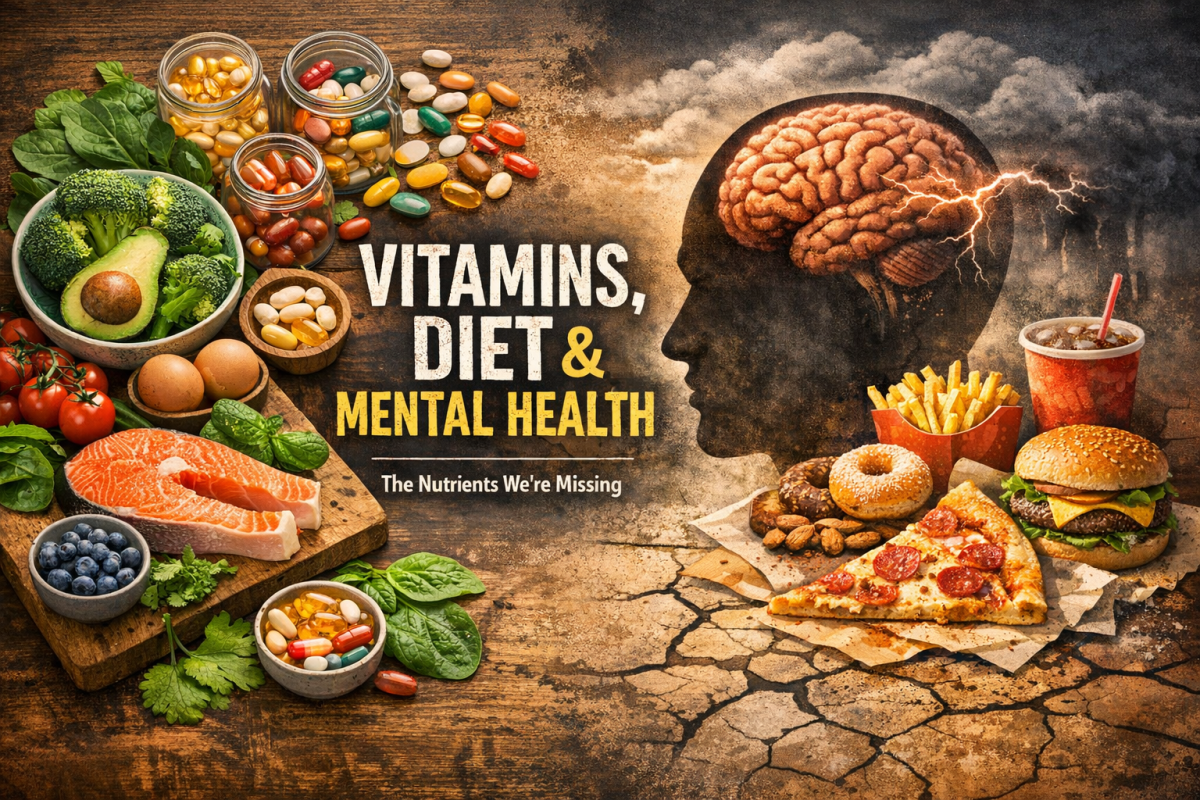
Walk into any grocery store in America and you’ll see the same paradox: aisles overflowing with food, yet a population quietly starving for nutrients that actually support the brain, mood, and long‑term health. It’s one of the great contradictions of the modern American diet — abundance without nourishment.
We talk a lot about calories. We talk a lot about protein. But we rarely talk about the vitamins that keep our minds stable, our energy consistent, and our emotional resilience intact. And in a country where convenience foods dominate and stress levels are sky‑high, that gap is starting to show.
The Vitamin Deficit Hidden in Plain Sight
Despite living in one of the wealthiest food environments in the world, Americans are chronically low in several key vitamins tied directly to mental health:
Vitamin D — essential for mood regulation
B vitamins — crucial for energy, focus, and nervous system stability
Omega‑3s — foundational for brain health and emotional balance
Magnesium — supports sleep, stress response, and muscle relaxation
These aren’t fringe nutrients. They’re the biochemical backbone of feeling human.
Yet the Standard American Diet (SAD) — heavy on processed grains, added sugars, and industrial oils — leaves millions undernourished in ways that don’t show up until the symptoms do: irritability, fatigue, brain fog, anxiety spikes, and emotional volatility.
The Food–Mood Connection Isn’t Woo — It’s Biochemistry
Mental health isn’t just psychological. It’s nutritional.
Your brain is a nutrient‑hungry organ, and when it doesn’t get what it needs, it sends signals — sometimes subtle, sometimes loud.
Low B12 can mimic depression.
Low magnesium can heighten anxiety.
Low vitamin D can flatten mood and motivation.
Low omega‑3s can impair emotional regulation.
This is why so many clinicians now consider nutritional status a foundational part of mental health care. It’s not a replacement for therapy or medication — it’s the soil those interventions grow in.
If you want to explore how vitamins fit into a holistic care model, HIAAH has a helpful overview of their approach here: Vitamin Services at HIAAH .
Why the American Diet Makes This Harder Than It Should Be
The modern food system is optimized for:
Shelf life
Speed
Cost
Convenience
It is not optimized for micronutrient density.
Fresh produce is expensive. Cooking takes time. Ultra‑processed foods are engineered to be irresistible. And the result is a population that is technically fed but nutritionally fragile.
This fragility shows up in our mental health statistics long before it shows up in our lab work.
Reclaiming Nutritional Sanity, One Habit at a Time
You don’t need a perfect diet to support your mental health — you just need a more intentional one.
A few high‑impact shifts:
Add one leafy green to your daily routine.
Swap one processed snack for a whole‑food option.
Prioritize foods rich in omega‑3s (salmon, walnuts, flax).
Consider a vitamin D supplement if you live in a low‑sun region.
Small changes compound. And when the goal is mental clarity, emotional steadiness, and long‑term resilience, those changes matter more than we’ve been taught to believe.
How Culture, Economics, History, and the Dinner Table Could Save the Future
🥗 COURSE ONE: THE APPETIZER — The American Dream You Could Taste
If you want to know how a nation is doing, don’t look at the stock market. Look at the dinner table.
Food is the first place where economic pressure shows up. It’s the first place where culture evolves. It’s the first place where families feel the squeeze — or the relief.
And right now, the American table is telling a story we can’t afford to ignore.
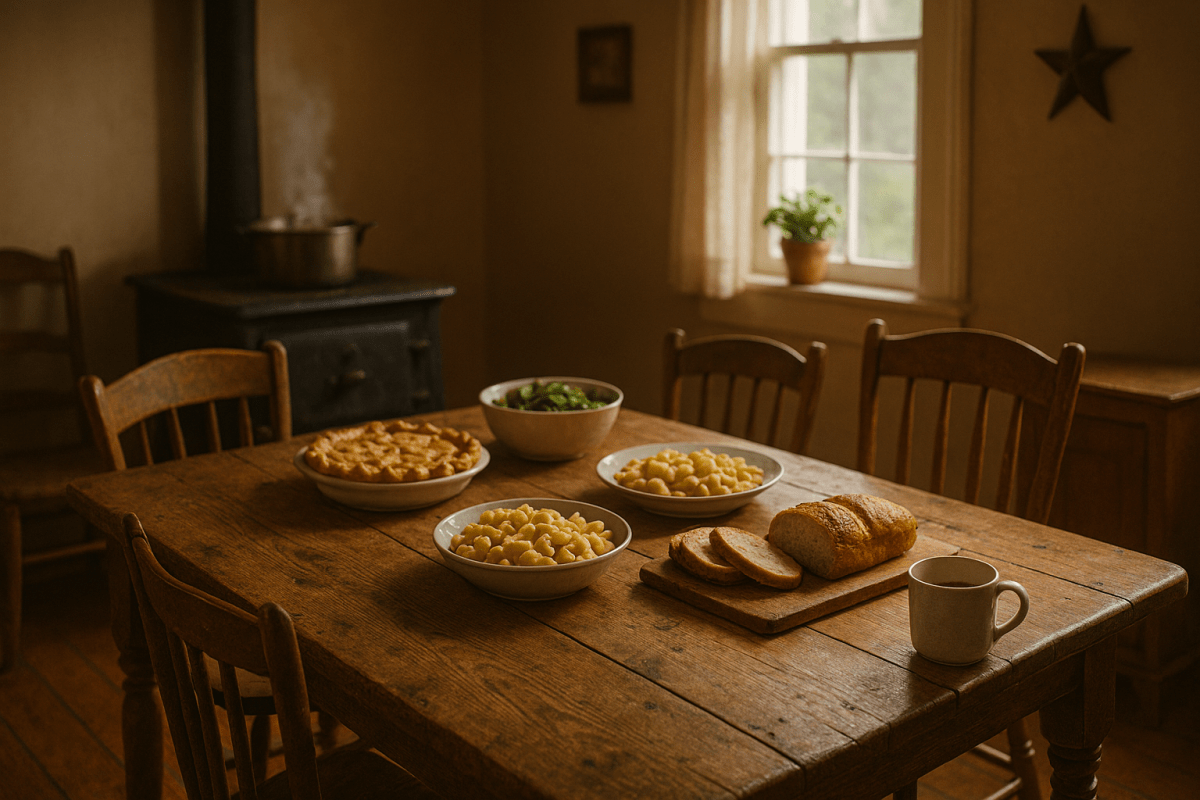
There was a time — not that long ago — when the American Dream wasn’t a mansion or a yacht. It was a kitchen.
A small home. A family table. A pot of something simmering. A sense of stability you could feel in the air.
Food was the heartbeat of the Dream:
Sunday dinners
Holiday spreads
Neighborhood cookouts
Recipes passed down like treasure
And here’s the part that matters: In 1970, the average American could realistically secure the seven pillars of the American Dream — a home, a family, education, healthcare, transportation, retirement security, and upward mobility — in about 30,000 hours of work.
That’s roughly 15 years of full‑time effort.
Fifteen years to build a life. Fifteen years to create a home where food wasn’t a luxury — it was a ritual.
Today, that Dream costs 103,800 hours — nearly 52 years.
The Dream didn’t disappear. It just drifted off the table.
🍲 COURSE TWO: THE MAIN DISH — The Cost of Living and the National Debt
Here’s the part most people don’t connect: The national debt isn’t an abstract number. It’s a kitchen‑table issue.
When the debt grows faster than the economy, the cost of living rises in ways families feel immediately — especially in food.
How debt hits the dinner table:
Higher interest rates → higher costs for farmers, producers, and transport
Inflation → groceries become unpredictable
Crowded‑out public investment → weaker infrastructure and higher long‑term costs
Wage stagnation → every dollar buys less
This is how we went from 30,000 hours to 103,800 hours in two generations.
And yet, there’s a path back.
Not through austerity. Not through fantasy. But through something America has done before: a windfall.
A windfall can be:
A technological boom
A resource boom
A productivity boom
A cultural boom
But the most powerful windfall isn’t financial. It’s cultural.
🍛 COURSE THREE: THE SIDE DISH — The Cultural Windfall
Every society reaches a moment when greed stops being cool.
The Gilded Age had its moment. The Roaring Twenties had theirs. The 1980s excess eventually gave way to minimalism and sustainability.
America is approaching another one of those moments.
People are tired of spectacle. Tired of noise. Tired of the feeling that the Dream is slipping away no matter how hard they work.
A cultural windfall happens when society collectively decides to value:
Stability over status
Community over consumption
Legacy over luxury
Stewardship over spectacle
And here’s the twist: When culture shifts, the wealthy shift with it.
Not because they’re forced to. But because stewardship becomes the new status symbol.
Why the wealthy would choose to give back:
Stability is good for markets
A strong middle class is good for business
Legacy matters
Voluntary contribution beats unpredictable policy
Responsibility becomes prestigious
It’s the difference between showing off a $500 steak and showing off a community kitchen you funded.
One is indulgence. The other is legacy.
A cultural windfall doesn’t just change attitudes. It changes behavior. And behavior changes economies.
🍰 COURSE FOUR: DESSERT — History’s Proof That Culture Can Save Economies
This isn’t wishful thinking. History is full of moments where cultural shifts reshaped economies.
Athens
Wealthy citizens funded ships, festivals, and infrastructure because generosity was admired and greed was mocked.
Rome (Republic era)
Elites built roads, aqueducts, and public works because civic virtue was the currency of status.
The Islamic Golden Age
Charitable endowments built hospitals, universities, and social systems — not through taxation, but cultural expectation.
Medieval Europe
Merchant families funded cathedrals, bridges, and schools because public giving earned honor.
The Progressive Era
A backlash against Gilded Age excess led to philanthropy booms, public health reforms, and worker protections.
Post‑WWII Reconstruction
Shared sacrifice and cultural unity rebuilt entire nations.
Modern ESG movements
Companies now compete to appear responsible — not just profitable.
History is clear: When culture shifts, economies follow.
☕ THE FINAL SIP — Bringing the Dream Back Under 15,000 Hours
A cultural windfall — paired with smart economic choices — could:
Lower inflation
Stabilize interest rates
Strengthen wages
Reduce long‑term debt pressure
Make essentials affordable again
Bring the American Dream back into reach
Not in 52 years. Not in 30 years. But potentially back toward 15,000–30,000 hours — a human‑sized goal.
And food becomes the symbol of the turnaround:
When the economy stabilizes, the table stabilizes. When the table stabilizes, the Dream stabilizes. When the Dream stabilizes, America stabilizes.
The American Dream used to be something you could taste. It can be again.
Food lovers understand something most people overlook: If you want to know how a nation is doing, look at its dinner table.
Food is the first place where economic pressure shows up. It’s the first place where culture evolves. It’s the first place where families feel the squeeze — or the relief. And right now, the American table is telling a story we can’t afford to ignore.
This isn’t nostalgia. This is a wake‑up call.
Because the American Dream used to be something you could taste. Now it’s something many people can barely afford to smell.
🍳 When the American Dream Was Served Hot
Ask anyone who grew up in the 60s or 70s what the American Dream looked like, and they won’t describe a mansion or a yacht. They’ll describe a kitchen.
A small home. A family table. A pot of something simmering. A sense of stability you could feel in the air.
Food was the heartbeat of the Dream. Sunday dinners. Holiday spreads. Neighborhood cookouts. Recipes passed down like treasure.
And here’s the part that matters: In 1970, the average American could realistically secure the seven pillars of the American Dream — a home, a family, education, healthcare, transportation, retirement security, and upward mobility — in about 30,000 hours of work.
That’s roughly 15 years of full‑time effort.
Fifteen years to build a life. Fifteen years to create a home where food wasn’t a luxury — it was a ritual.
🥘 Food Culture Exploded — But So Did the Cost of Living
Fast‑forward to today.
We live in a golden age of flavor. Global ingredients. Fusion cuisine. Farm‑to‑table everything. Food shows, food influencers, food tourism, food obsessions.
Our plates got more exciting. Our grocery bills got more painful.
Because while food culture expanded, the American Dream shrank.
The Dream that once took 15 years now takes almost an entire working lifetime.
And food lovers feel this shift first.
🍲 Food People Notice the Cracks Before Anyone Else
If you love food, you pay attention. You notice when a dozen eggs jumps from $1.29 to $6.49. You notice when a simple grocery run feels like a luxury outing. You notice when restaurants quietly raise prices, shrink portions, or cut corners.
You notice when:
A family dinner becomes a budgeting exercise
A holiday feast becomes a financial stretch
A night out becomes a rare indulgence
A home‑cooked meal becomes the only viable option
Food is the canary in the coal mine of the American Dream. And right now, that canary is wheezing.
🍕 The Dream Used to Arrive in Your 30s — Now It Shows Up in Your 60s
In 1970, you could expect to:
Buy a home
Raise a family
Build a life
And still have time to enjoy it
By your mid‑30s.
Today?
The Dream doesn’t arrive in your 30s. Or your 40s. Or even your 50s.
For many Americans, it arrives — if at all — in their late 60s.
That’s not a dream. That’s a delay.
And it changes everything about how we eat, gather, celebrate, and live.
🥗 But Food Is Still Where Hope Lives
Here’s the twist: Food lovers are some of the most resilient people on the planet.
We adapt. We create. We stretch ingredients. We reinvent traditions. We turn scarcity into creativity.
Food people know how to make something out of nothing. We know how to turn a cheap cut into a masterpiece. We know how to turn a small kitchen into a sanctuary. We know how to turn a shared meal into a moment of abundance.
Food is still the most democratic joy we have left. It’s still the place where connection happens. It’s still the place where the Dream feels alive — even when everything else feels out of reach.
🍽️ The New American Dream Starts With a Table, Not a Mortgage
Maybe the American Dream isn’t dead. Maybe it’s evolving.
Maybe it’s becoming less about owning things and more about experiencing things. Less about square footage and more about connection. Less about climbing and more about savoring.
Food lovers are leading that shift.
Because when you cook for someone, you’re saying:
You matter
You belong
You’re welcome
We’re in this together
And that’s the heart of the American Dream — not the house, not the car, not the paycheck, but the table.
A place where people gather. A place where stories are shared. A place where life slows down. A place where the Dream still feels possible.
🍰 If You Love Food, You’re Already Rebuilding the Dream
Food lovers are the memory‑keepers. The culture‑carriers. The community‑builders. The ones who remind the world that joy doesn’t have to be expensive.
You don’t need a 3,000‑square‑foot house to make a great meal. You don’t need a six‑figure income to create a moment of magic. You don’t need the old American Dream to live a meaningful life.
You just need a kitchen. A table. A recipe. A story. A willingness to share.
Food is how we reclaim the Dream — not by chasing what used to be, but by creating what comes next.
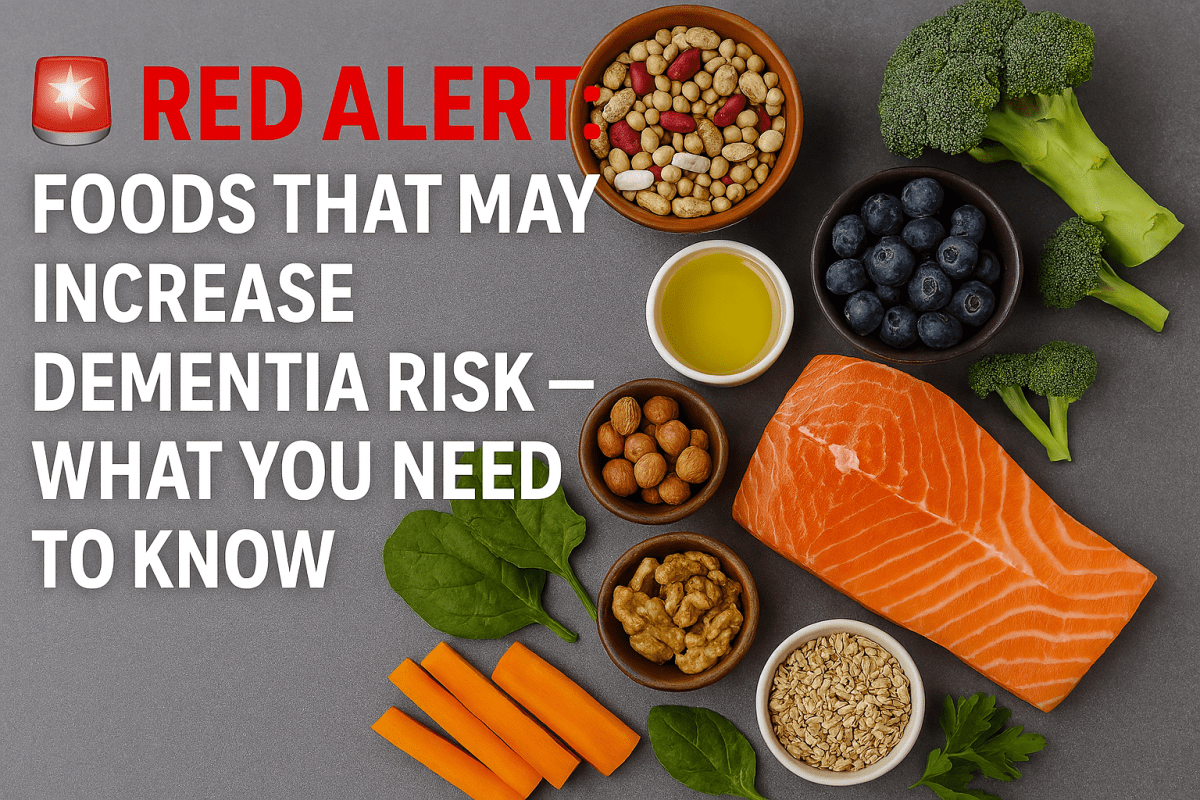
When we talk about “dangerous foods,” most people think about heart disease, diabetes, or weight gain. But there’s a quieter, more alarming threat tied directly to what we eat: cognitive decline and dementia.
Emerging research shows that certain foods may increase your risk of dementia, while others appear to protect your brain over time. If you care about long‑term memory, clarity, and staying sharp as you age, this is a Red Alert worth paying attention to.
Below is a breakdown of what current studies are saying, what foods to avoid, and what to eat instead.
🧠 The Big Picture: Diet and Brain Health
A growing body of research shows that diet plays a major role in cognitive decline. Studies link inflammation, oxidative stress, and poor cardiovascular health to increased dementia risk — and food is a major driver of all three.
One large study published in Neurology found that diets high in ultra‑processed foods were associated with a significantly higher risk of dementia. Meanwhile, Harvard researchers highlight that flavonoid‑rich foods — like berries, apples, tea, and peppers — are associated with a lower risk of dementia over time.
So what exactly should we be avoiding?
🚫 Red Alert Foods: What Increases Dementia Risk
Ultra‑Processed Foods (UPFs)
These are the biggest offenders. Examples include:
Packaged snacks
Sugary cereals
Fast food
Frozen meals
Sweetened beverages
Studies show a clear correlation between high UPF intake and increased dementia risk. These foods are typically high in sugar, salt, and unhealthy fats — and low in nutrients your brain needs.
Added Sugars & Refined Carbs
Examples include:
Pastries
White bread
Candy
Sugary drinks
Excess sugar fuels inflammation and oxidative stress, both of which damage brain cells and impair memory.
Saturated & Trans Fats
Found in:
Fried foods
Margarine
Fatty red meats
Processed meats
These fats raise cholesterol and contribute to inflammation — two major risk factors for cognitive decline.
🟢 Brain‑Boosting Foods: What Helps Protect Memory
Research highlights foods that may reduce dementia risk, especially those rich in flavonoids, antioxidants, and healthy fats.
Eat more of:
Berries (blueberries, strawberries)
Leafy greens
Olive oil
Nuts & seeds
Whole grains
Fish (salmon, sardines, mackerel)
Tea (black or green)
Colorful vegetables (peppers, onions, carrots)
People who consumed the most flavonoid‑rich foods had a 28% lower risk of developing dementia in a long‑term study of over 121,000 adults.
🥗 Diet Patterns That Support Brain Health
Mediterranean Diet
High in:
Olive oil
Fish
Vegetables
Legumes
Nuts
Low in:
Red meat
Sweets
DASH Diet
Originally designed for heart health — but great for the brain too.
MIND Diet
A hybrid of Mediterranean + DASH, specifically created to reduce Alzheimer’s risk.
These diets emphasize whole foods, healthy fats, and antioxidants — exactly what the brain thrives on.
⚠️ Why This Matters
Dementia rates are rising globally. While genetics and age play a role, lifestyle choices — especially diet — are powerful levers we can control.
Your brain is your most valuable asset. Protecting it starts with what you put on your plate.
🔥 Final Takeaway
If you want to reduce your risk of dementia:
Cut back on ultra‑processed foods, added sugars, and unhealthy fats.
Load up on whole foods, especially berries, vegetables, nuts, and fish.
Consider adopting a Mediterranean or MIND‑style eating pattern.
Small changes today can protect your memory tomorrow.
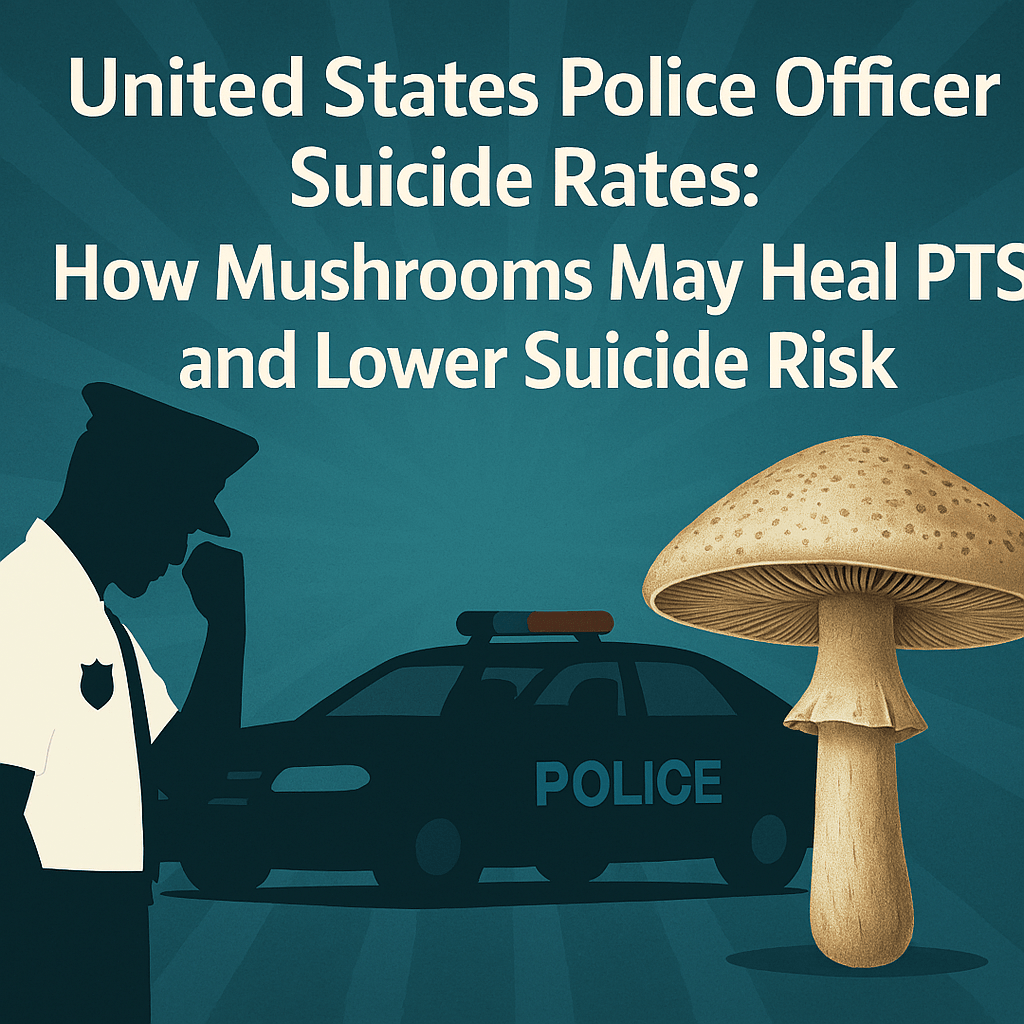
The Crisis of Police Officer Suicide in the United States 🚨
In a country that reveres its protectors, the mental health of police officers is often overlooked. Suicide rates among U.S. law enforcement are alarmingly high—2022 saw the most recorded deaths by suicide since 2019. And according to SoundThinking, the true numbers may be even higher due to underreporting.
As someone passionate about holistic healing and immune-boosting foods, I (Amanda Leerow) couldn’t ignore the growing evidence that mushrooms—especially psilocybin—may offer a path to healing. This post explores how these natural compounds could help officers struggling with PTSD and suicidal ideation.
Understanding Police Officer Suicide Rates in the United States 📊
Recent Trends: In 2023, 122 officers died by suicide. While slightly lower than 2022, the numbers remain deeply concerning.
Key Risk Factors:
Chronic exposure to trauma
Sleep disruption and hypervigilance
Stigma around seeking help
Lack of personalized mental health support
Impact: The loss of an officer affects families, departments, and communities. It’s a wound that ripples outward.
The SoundThinking blog emphasizes how depression affects officers at nearly double the rate of the general population—12% vs. 6.8%. Clearly, traditional approaches aren’t enough.
The Role of PTSD in Law Enforcement Suicide 🧠
PTSD is a silent epidemic in law enforcement. Officers face repeated exposure to violence, death, and human suffering. Over time, this leads to:
Emotional detachment
Flashbacks and nightmares
Isolation and burnout
Suicidal ideation
In Trump’s Surgeon General Endorses Psychedelic Therapy, former Surgeon General Jerome Adams discusses how psychedelics like psilocybin may offer new hope for those battling trauma—including first responders.
The Science Behind Mushrooms for PTSD: What the Research Shows 🍄
Psilocybin, the active compound in “magic mushrooms,” interacts with serotonin receptors and can induce profound emotional breakthroughs. Research shows:
Neuroplasticity Boost: Psilocybin promotes brain rewiring, helping break cycles of depression and trauma.
Emotional Processing: It allows suppressed emotions to surface and be integrated.
Clinical Trials: Studies at Johns Hopkins and NYU show significant reductions in PTSD and depression symptoms after guided psilocybin sessions.
In Joe Rogan Experience #1035 – Paul Stamets, mycologist Paul Stamets explains how psilocybin mushrooms may help reframe traumatic memories and restore emotional balance. He also discusses the potential of stacking psilocybin with lion’s mane and niacin to enhance neurogenesis—a concept that could revolutionize PTSD treatment.
It’s important to distinguish between:
Psilocybin mushrooms: Used in psychedelic therapy
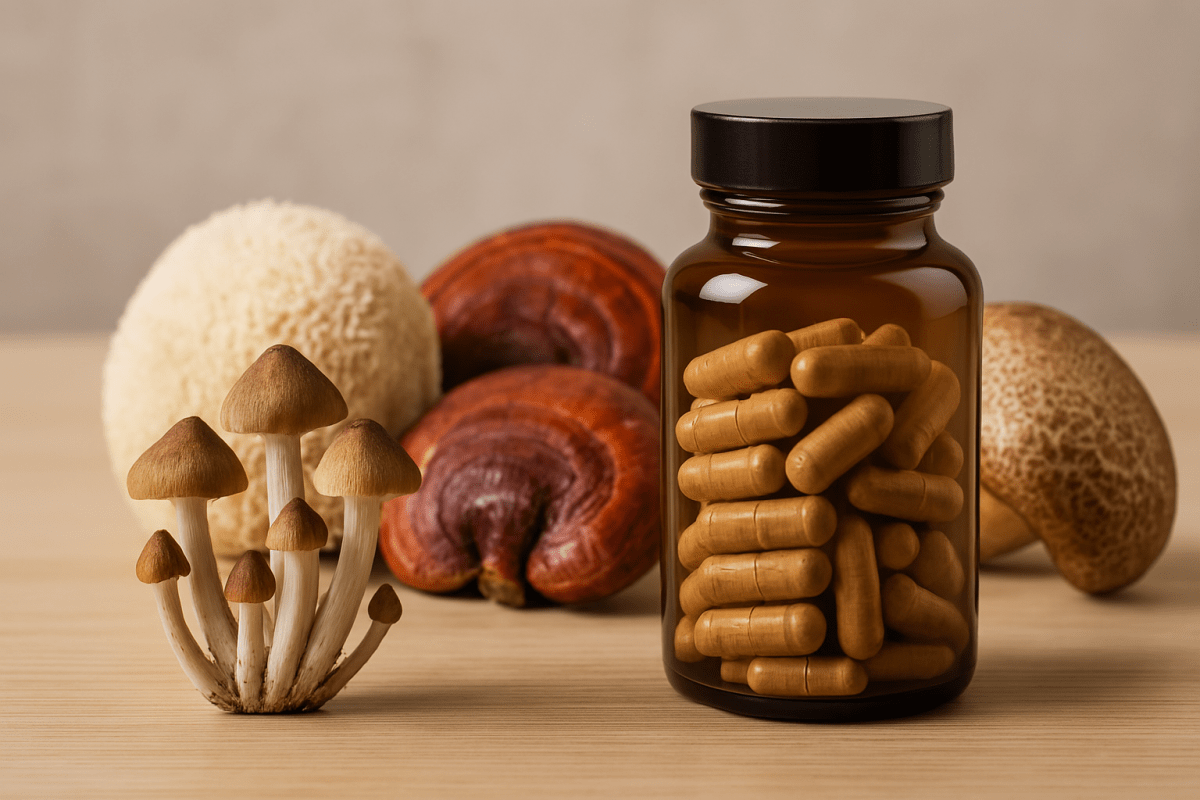
Functional mushrooms: Like lion’s mane and reishi, which support general brain and immune health
Real-World Experiences: Police, PTSD, and Psilocybin Therapy 👮♂️➡️
Some officers are already exploring psychedelic therapy—and few voices are more compelling than Sarko Gergerian’s.
In Joe Rogan Experience #2357, Gergerian—a law enforcement professional and mental health counselor—shares his journey of integrating psychedelic self-care into his recovery from trauma. As a founding member of CLEAR (Community and Law Enforcement Assisted Recovery), he’s pioneering a recovery-oriented policing model that embraces holistic healing, including psilocybin therapy.
Gergerian’s story is groundbreaking because:
He speaks from lived experience as both a cop and a counselor.
He advocates for psychedelics not as escapism, but as structured, intentional healing.
He emphasizes the importance of community, integration, and ethical access to these therapies.
His appearance on Rogan’s podcast is a watershed moment for psychedelic advocacy in law enforcement. It shows that change is not only possible—it’s already happening.
Other examples include:
Randy Weaver’s Story: A New York police officer and army veteran diagnosed with PTSD in 2007, Randy shares his healing journey through psilocybin in Heroic Hearts Project on Instagram.
Veteran Retreats: Organizations like Heroic Hearts and TheraPsil offer guided psychedelic experiences for first responders and veterans.
Challenges remain:
Legal restrictions (psilocybin is still federally illegal)
Ethical concerns around treatment access
Need for trained facilitators and safe environments
But Gergerian’s voice adds weight to the movement. His work bridges the gap between law enforcement culture and progressive mental health care—making psilocybin therapy not just plausible, but necessary.
Suicide Prevention Strategies for Law Enforcement: Where Mushrooms Fit In 🛡️
Traditional programs include peer support, therapy dogs, and mobile wellness apps. But they often fall short due to stigma and lack of personalization.
Psilocybin-assisted therapy could:
Complement existing mental health programs
Offer breakthroughs where talk therapy stalls
Help officers reconnect with purpose and community
The SoundThinking article highlights how technology and trauma-informed care are improving officer wellness. Psilocybin could be the next frontier—if policy and public perception evolve.
Conclusion: Hope for Healing and Reducing Police Officer Suicide Rates 🌱
Police officers deserve more than medals—they deserve healing. Addressing PTSD and mental health isn’t just compassionate; it’s essential for public safety.
Mushrooms, once misunderstood, are now emerging as powerful tools for transformation. With continued research, advocacy, and destigmatization, psilocybin therapy could help save lives and restore hope to those who protect and serve.
Not sure what you can do to help push this to the world? Let’s support further research, push for policy reform, and create safe access to psychedelic therapy for law enforcement. Because behind every badge is a human being who deserves to heal.
🌱 Introduction: The Rise of Micro Dosing With Mushrooms for Public Health
Micro dosing—taking sub-perceptual amounts of psychedelic substances—is no longer a fringe wellness trend. In 2025, it’s gaining traction in public health conversations, with advocates pointing to its potential for mental clarity, emotional resilience, and even societal well-being.
Unlike traditional psychedelic use, which involves full-dose experiences often tied to therapy or spiritual exploration, micro dosing aims to subtly enhance daily functioning without inducing hallucinations. This nuanced approach is now being explored by researchers, policymakers, and wellness brands alike.
One of the most compelling voices in this space is mycologist Paul Stamets, who appeared on Joe Rogan Experience #2347 to discuss the historical and ecological significance of psilocybin mushrooms. Stamets emphasized their role in indigenous healing practices and their potential to support both personal and planetary health.
🍄 What is Micro Dosing With Mushrooms?
Micro dosing typically involves consuming 0.1 to 0.3 grams of dried psilocybin mushrooms every few days. The goal isn’t to “trip,” but to gently stimulate neural pathways and emotional balance.
Common mushrooms used include:
Psilocybin mushrooms (e.g., Psilocybe cubensis) for mood and cognition
Functional mushrooms like Lion’s Mane, Reishi, and Chaga for immune and brain support
Micro dosing differs from recreational or therapeutic (macro) doses in that it’s designed for integration into daily life—enhancing rather than disrupting.
🌟 Potential Public Health Benefits of Micro Dosing With Mushrooms
Early studies and anecdotal reports suggest promising outcomes:
Mental health support: Reduced symptoms of anxiety, depression, and PTSD
Cognitive enhancement: Improved focus, creativity, and memory
Physical health: Potential relief for chronic pain, addiction, and neurodegenerative conditions
Stamets highlighted research showing psilocybin’s ability to stimulate neurogenesis and reduce inflammation—key factors in brain health and emotional regulation.
⚠️ Risks and Concerns: Is Micro Dosing Safe for the Public?
Despite growing interest, micro dosing isn’t without risks:
Lack of regulation: Dosage and purity vary widely across products
Side effects: Some users report nausea, anxiety, or heart palpitations
Legal ambiguity: Psilocybin remains a controlled substance in many regions
Vulnerable populations—such as those with heart conditions or psychiatric disorders—should approach with caution and consult professionals before experimenting.
🔬 Current Research and Public Health Initiatives
Scientific interest is surging. Clinical trials are underway to explore micro dosing’s effects on:
Depression and anxiety
PTSD in veterans and first responders
Cognitive decline in aging populations
Stamets and Rogan discussed how bipartisan support is growing, with figures like former Texas Governor Rick Perry advocating for therapeutic legalization. Some cities have launched pilot programs to study community-level impacts.
✅ Guidelines for Safe and Responsible Micro Dosing With Mushrooms
If you’re considering micro dosing, here are some best practices:
Consult a healthcare provider—especially if you’re on medication or managing a condition
Choose reputable sources: Brands like HIAAH offer high-quality mushroom supplements, including their Lion’s Mane Complex—a blend of Lion’s Mane, Chaga, Maitake, Shiitake, and Reishi designed to support cognitive and immune health
Track your experience: Journaling effects can help you adjust dosage and timing safely
🔮 The Future of Micro Dosing With Mushrooms for Public Health
Looking ahead, we may see:
Legal reform: Decriminalization and medical access expanding across states
Holistic strategies: Mushrooms integrated into preventive care, mental wellness, and even education
Stamets envisions a future where mushrooms are not only tools for healing but catalysts for ecological and cultural transformation.
🧠 Conclusion
Micro dosing with mushrooms sits at the intersection of ancient wisdom and modern science. While the potential benefits are exciting—from mental health to neuroprotection—responsible use and rigorous research are essential.
As Stamets reminds us, mushrooms are nature’s allies in healing both people and the planet. Whether through psilocybin or functional blends like HIAAH’s Lion’s Mane Complex, the mushroom renaissance is reshaping how we think about wellness in 2025.
Stay curious, stay informed, and always consult a professional before starting any new health practice.
Hello, wonderful readers! With the 2024 election on the horizon, it’s time to start thinking about the impact our votes can have. It’s a chance to reflect on the values and policies that matter most to us. Whether championing women’s rights, supporting the middle class, empowering small businesses, or considering leadership qualities, every aspect plays a super crucial role in shaping our future. Let’s dive into a friendly discussion about why considering candidates like Kamala Harris might align with your values and why some are hesitant about Donald Trump, all while keeping the conversation light-hearted and constructive.
Championing Women’s Rights with Kamala Harris
Kamala Harris stands out for her firm support of women’s rights, particularly the right to choose. It’s a cornerstone for many voters who believe in the autonomy of their bodies and decisions. If you’re passionate about ensuring the government respects personal choices and champions women’s health and freedom, Harris’s stance might resonate with you.
Empowering the Middle Class and Families
The cost of living and raising a family in today’s economy is a pressing concern for many. Harris advocates for policies aimed at easing the financial burdens on middle-class families. From affordable healthcare to accessible education, understanding her approach might offer hope for those feeling the economic squeeze.
Boosting Small Businesses
Small businesses are the heartbeat of America’s economy. Harris’s support for tax breaks and other incentives to help small businesses flourish could be a game-changer. This approach not only supports entrepreneurship but also contributes to community prosperity.
Reflecting on Leadership Qualities
When it comes to leadership, qualities like empathy, responsibility, and a commitment to democracy are crucial. Some express concerns about Donald Trump’s leadership style, citing his approach to governance and controversies surrounding his presidency. Reflecting on these aspects can help voters consider what traits they value in a leader.
Navigating Concerns and Looking Forward
It’s understandable to have concerns about any candidate. For those unsure about Trump, issues ranging from his demeanor, legal challenges, and stance on democratic processes might give pause. Meanwhile, considering what Harris or any other candidate brings to the table in terms of policies and leadership can provide clarity.
Conclusion
As the 2024 election draws near, it’s more important than ever to reflect on what matters most to us. By considering the policies, values, and leadership qualities of candidates like Kamala Harris and Donald Trump, we can create well-informed decisions that align with our hopes for the future. Remember, every vote counts, and it’s our collective voices that will shape the direction of our country. So, let’s stay informed, respectful, and enthusiastic about making our votes count for the values we cherish. Happy voting, everyone! 😊
As the 2024 election looms on the great horizon, voters are once again faced with the monumental task of deciding the future direction of our country. Among the sea of candidates, Donald Trump’s bid for re-election is perhaps the most polarizing. Known for his brash personality and tumultuous tenure, Trump remains a figure shrouded in controversy. For those sitting on the fence, understanding the man behind the MAGA hats is crucial. This piece aims to peel back the crazy layers, offering an unvarnished glimpse into why some voters are adamant in their refusal to grant Trump another term in office.
The Infantile Demeanor
Often perceived as petulant and quick to anger, Trump’s tenure was marked by an inability to accept criticism or responsibility. This child-like refusal to acknowledge mistakes or to engage constructively with opposition paints a picture of a leader ill-equipped to navigate the complexities of governance where compromise and humility are sometimes necessary.
Legal Entanglements and Ethical Quandaries
With a history mired in legal and ethical scandals, Trump’s presidency was no stranger to controversy. From impeachment inquiries to ongoing investigations, the cloud of legal scrutiny raises questions about the integrity and accountability expected of the highest office in the land.
A Divisive Figure
Rather than unite, Trump’s rhetoric often served to deepen the divides within American society. His tenure was characterized by a dismissive attitude towards democratic norms, a penchant for conspiracy theories, and a concerning affinity for authoritarian leaders, which, for many, signals a threat to the democratic fabric of the nation.
Misogyny and Disrespect
Trump’s treatment of women, both in word and deed, has frequently crossed the line into outright misogyny. His objectification of women and history of derogatory comments contribute to a persona many find antithetical to the values of respect and equality.
Election Integrity and January 6th
Perhaps most alarming is Trump’s persistent undermining of election integrity and his role in inciting the horrible January 6th insurrection. These actions not only threaten the peaceful transfer of power—a cornerstone of democracy—but also reveal a willingness to sacrifice the nation’s foundational principles for personal gain.
A Question of Competence
From foreign policy blunders to domestic crises, Trump’s leadership has often been criticized for its lack of foresight and understanding. His erratic decision-making and preference for loyalty over expertise have led to decisions that, at times, compromised national security and public well-being.
Conclusion
As voters, the responsibility to critically evaluate a candidate’s record and character is paramount. Donald Trump’s bid for re-election in 2024 is no exception. Beyond the slogans and spectacle lies a record fraught with division, controversy, and a disregard for democratic norms. For those undecided, the question remains: Is this the leadership we envision for our nation’s future? As the election draws near, let us all ponder this question deeply, for the answer will shape the America that we, and generations to follow, will live in.
Navigating the maze of mental health services can feel like deciphering an ancient code. Yet, here we are, ready to lay out the map. Whether you’re in the throes of a crisis or on a steady path to better managing your mental health, immediate support is a text or call away with the Veterans Crisis Line and the 988 Crisis Lifeline.
We understand the urgency of finding the right health care provider. It’s like matchmaking; not everyone will be your cup of tea. For starters, your primary care provider can serve as a compass, pointing you toward the most suitable services. Don’t forget, resources like SAMHSA and the Department of Veterans Affairs are like the North Star for finding mental health care.
But it’s not all about crises. For the warriors among us, medical center resources and community mental health services stand ready, regardless of discharge status. And for the digital natives, or those of us who just prefer to text than talk, online mental health platforms offer a bridge to support.
Let’s not overlook our youth. Tailored youth programs tackle emotional and behavioral challenges early on. It’s like catching a leak before it floods the basement—prevention is always better than cure.
For our veterans, the arsenal of mental health resources is vast. From PTSD treatments at VA medical centers to support networks like NAMI, help is but a step away. And remember, support is available Monday through Friday, and beyond. Your mental well-being is a priority, every day of the week.
Key Takeaways
In the universe of mental health, it’s a jungle out there. But fear not, we’re here to be your guides. From the dark clouds of a crisis to the pursuit of long-term management, there’s a light at the end of the tunnel. Immediate assistance is closer than you think, with the Veterans Crisis Line and the 988 Crisis Lifeline being your beacons of hope.
Finding the right health care provider shouldn’t be like finding a needle in a haystack. Think of your primary care provider as your personal GPS, guiding you to the mental wellness path that suits you best. And when in doubt, the Substance Abuse and Mental Health Services Administration (SAMHSA) and the Department of Veterans Affairs are your go-to directories for finding top-notch care.
But what about after the storm passes? Whether you’re a seasoned warrior or a digital native, there’s a spectrum of resources waiting. Medical center facilities and community-driven initiatives stand ready to support, no matter your discharge status. And for those who prefer tapping on a screen to talking, online platforms have got your back.
Let’s not forget the young ones. Initiatives geared toward our youth aim to catch and address emotional and behavioral hurdles early—prevention is the name of the game.
And to our veterans, we salute you. Your battlefield might have changed, but the resources at your disposal are vast and mighty. From PTSD treatments at VA medical centers to the camaraderie found in support networks like NAMI, you’re never alone. Help is available Monday through Friday, and every day in between. Your mental well-being is our mission, every step of the way.
Accessing Immediate Help and Support
If you’re in urgent need of support, help is closer than you might think. Emergency mental health care is accessible 24/7, offering a lifeline during crisis moments. Reach out to dedicated services like the Veterans Crisis Line or the 988 Suicide & Crisis Lifeline for immediate assistance. They’re just a call or text away, providing a listening ear and necessary interventions at any hour.
For those looking to navigate the maze of mental health resources, start by consulting a primary care provider. They can perform initial screenings and offer referrals to specialists. Organizations such as SAMHSA and the Department of Veterans Affairs are invaluable for connecting with mental health services that suit your needs. Whether it’s counseling, therapy, or medication, options are plentiful and varied.
Don’t overlook the convenience of online mental health care. Digital platforms offer telehealth services and self-help tools, making support accessible from the comfort of your home.
Finding the Right Health Care Provider
In our search for the right healthcare provider, we often overlook the wealth of mental health resources available to us. The Substance Abuse and Mental Health Services Administration (SAMHSA) and the Department of Veterans Affairs (VA) provide a solid starting point. They offer an array of services from Monday through Friday, making the process less overwhelming.
For those requiring more specialized care, consulting with a primary care provider might reveal referrals to suitable medical centers or community mental health facilities. These centers are hubs of support, offering everything from counseling to medication management.
And let’s not forget about the digital sphere. Telehealth services have surged in popularity, offering convenience without compromising on quality. For veterans, the VA’s telemental healthcare services are a click away, bridging the gap between need and support effectively.
Seeking help is a sign of strength. With so many options at our fingertips, finding the right healthcare provider has never been easier.
Navigating Mental Health Care Options
Exploring options for mental wellness care can sometimes feel like solving a complex puzzle. Yet, the right piece can click into place with a bit of guidance. For immediate assistance, the Veterans Crisis Line and the 988 Suicide & Crisis Lifeline offer round-the-clock support. These lifelines are critical for those moments when you need a voice of calm and direction immediately.
Identifying the most fitting healthcare provider often starts with a conversation with your primary care physician, who can provide initial screenings and guide you toward the appropriate mental health services. The Substance Abuse and Mental Health Services Administration (SAMHSA) and the Department of Veterans Affairs (VA) are invaluable resources in this search, especially for veterans needing access to a medical center or specialized care.
For veterans, accessing treatments through VA medical centers is streamlined, needing no regard to discharge status or VA healthcare eligibility. Whether it’s Monday through Friday or a weekend crisis, help is within reach.
Online Mental Health Services Explained
Delving into the specifics of online mental health services, we find an array of digital resources at our fingertips. The Veterans Affairs (VA) offers telemental healthcare, making counseling and therapy accessible from the comfort of home. Equally convenient is the Veteran Training online self-help portal, a boon for those preferring self-guided support.
For those of us juggling busy schedules, the flexibility of accessing care Monday through Friday without the constraint of office hours is a game-changer. It bridges the gap for individuals facing mental health problems, offering a lifeline in times of need.
Connecting with peer support networks or finding the right health care provider has been simplified, thanks to the Substance Abuse and Mental Health Services Administration (SAMHSA) and resources like Military OneSource. These platforms provide not just support but a community for those on their healing journeys.
Connecting with Peer Support Networks
Building bridges to peer support groups offers a powerful tool in our arsenal against mental health problems. The camaraderie found in these circles, especially through initiatives like the Military OneSource peer assistance program, provides a sense of belonging and mutual support that’s hard to find elsewhere. It’s like having a battle buddy by your side, someone who truly gets it.
Identify your needs – Are you looking for empathy, advice, or both?
Research – Not all groups are created equal. Look for ones that match your vibe.
Engagement – Active participation can magnify the benefits.
Respect privacy – What’s shared in the group, stays in the group.
Give back – Sharing your own experiences can help others too.
Remember, it’s okay to test the waters before you jump in. And if the shoe doesn’t fit, try another size. There’s a community out there for everyone, ready to bolster your path to wellness with the right mental health resources.
Community Mental Health Resources
In our pursuit to support those facing mental health problems, we’ve mapped out a guide to effortlessly find mental health resources. If you or someone you know is in immediate need of assistance, services are accessible 24/7. For those not facing urgent concerns, health care professionals, including those at your local medical center, can provide screenings and refer you to specialized help.
We understand the weekends can be tough, which is why resources are not just a Monday through Friday affair. For veterans, connecting with peer support or exploring options at a VA medical center can be a game-changer, regardless of discharge status. And let’s not forget, the digital domain offers telehealth services, making it easier to access care from the comfort of home.
Finding the right support network is like finding the right pair of jeans – it might take a few tries, but once you find that perfect fit, the comfort is undeniable.
Youth Programs and Support Services
In addressing the needs of younger individuals, our focus shifts to programs aimed at supporting their emotional and behavioral development. Early intervention plays a pivotal role in the well-being of our youth, especially when it comes to tackling mental health problems. We’ve pinpointed services that specialize in assisting children and adolescents navigate the challenges they face, emphasizing the importance of accessible health care.
For those moments when immediate help is a must, emergency services remain on standby around the clock. Yet, the cornerstone of our approach lies in prevention and early support, guiding our young ones through tough times with a gentle hand. We encourage families to seek guidance from trained professionals who understand the nuances of youth mental wellness.
Our commitment stands firm: to guide, support, and uplift the spirits of the younger generation, steering them toward a path of resilience and emotional health.
Top 5 Mental Health Resources for Veterans
Exploring the top support systems for our nation’s heroes, we pinpoint five invaluable avenues for health care assistance.
VA Medical Centers offer a broad spectrum of care, focusing on both physical and psychological well-being, making them a cornerstone of veteran support.
Vet Centers provide a more intimate setting for counseling and community, offering services in a confidential and supportive environment.
Military OneSource extends a helping hand with its array of counseling options, available both online and in person, to suit different needs and schedules.
The National Alliance on Mental Illness (NAMI) introduces veterans and their families to programs and education aimed at combating stigma and fostering community.
VA’s Telehealth Services bridge the distance, bringing support directly to those who may face obstacles in accessing traditional care settings.
These resources stand as beacons, guiding our veterans through their journeys, assuring them they’re not marching alone.
Conclusion
We’ve walked through the maze of mental health services together, uncovering the layers of support available. From emergency hotlines like the Veterans Crisis Line to the seamless access of the 988 Suicide & Crisis Lifeline, we’ve underscored the lifelines that are just a call away. It’s reassuring to know that, in moments of crisis, these services stand ready to offer a helping hand.
Finding the right healthcare provider might feel like searching for a needle in a haystack, but it’s far from impossible. We’ve highlighted how starting with a primary care provider can open doors to specialized referrals. For those who’ve served, the VA’s resources are a goldmine, offering a spectrum of mental health services. And let’s not forget the SAMHSA and VA databases; they’re akin to a compass, guiding you to the right care.
In our exploration, the promise of telehealth shines bright, offering convenience and accessibility. It’s a bridge across the digital divide, bringing healthcare to your fingertips. For veterans, the VA’s telemental health services and the Veteran Training online portal underscore the commitment to accessible care. Peer support networks, too, offer a sense of belonging, a reminder that no one walks this path alone. Whether it’s through Vet Centers or community resources, the message is clear: support is all around.
Our venture into the mental health services available, especially for our veterans, is a reminder of the strength found in asking for help. As we conclude, remember that these resources, from Vet Centers to the National Alliance on Mental Illness (NAMI), are beacons of hope. They stand as testaments to the resilience within and the community’s unwavering support. Armed with this knowledge, taking the step toward mental wellness is not just a possibility—it’s a promise of a brighter tomorrow.
FAQ
How do I get immediate help for a mental health crisis? If you’re in a crisis, it’s critical to know help is just a call away. The 988 Suicide & Crisis Lifeline and the Veterans Crisis Line offer 24/7 support. Just dial the numbers, and you’ll find someone on the other end ready to help you through. It’s like having a lifeline in your pocket.
How can I find the right mental health care provider for me? Finding the right provider starts with a chat with your primary care doctor, who can steer you in the right direction. Don’t forget, resources like SAMHSA and the Department of Veterans Affairs are gold mines for locating services geared toward your needs. It’s a bit like matchmaking, but for your mental health.
What mental health care options are available to veterans? Veterans have a buffet of options available through VA medical centers. Whether it’s counseling, therapy, or medication, there’s something for everyone. And you don’t need to have a perfect discharge status to access these services. It’s the VA’s way of saying, “We’ve got your back,” no matter what.
Are there online services for mental health care? Absolutely, the digital leap in healthcare means you can access support from the comfort of your home. VA’s telehealth services and the Veteran Training online portal are just a click away. It’s like having a therapist in your living room, minus the couch.
What about connecting with others who understand what I’m going through? Peer support networks are a gem. Programs like Military OneSource let you connect with folks who’ve walked a mile in your shoes. It’s comforting to know there’s a community out there that gets it, ready to lift you up when you’re feeling down. It’s like finding your tribe, a group that truly understands the beat of your drum.
As a friend of a parent, I never thought I’d face the daunting challenge of navigating their teenager’s mental illness. But life had other plans. When their child struggled with anxiety and depression, we all felt lost and helpless. The journey was dark and isolating, but it also opened my eyes to the silent crisis affecting countless teenagers under 16.
Trauma, addiction, and suicide rates are skyrocketing among our young people. The statistics are staggering: 1 in 4 teenagers experiences a mental health disorder, 1 in 5 has considered suicide, and 1 in 10 has attempted it. The reality is grim, but we can’t afford to look the other way. It’s time for the Boomer generation to step up and support the younger generation in their fight for mental wellness.
Trauma, often resulting from Adverse
Childhood Experiences (ACEs), leaves horrible deep scars that can last a lifetime. Teenagers face unprecedented pressures, from social media’s curated highlight reels to academic expectations and bullying. It’s no wonder they’re turning to addiction – whether substance abuse, social media, or technology – to cope. But this temporary escape only worsens the problem.
Suicide rates are the devastating consequence of untreated mental health issues. We’ve lost too many bright, promising lives to the silence and stigma surrounding mental illness. We must create a safe space for teenagers to share their real struggles without fear of judgment.
So, what can the Boomer generation do to make a difference? Invest in proven mental health resources and support services. Fund research and initiatives focused on teen mental wellness. Offer mentorship and intergenerational connections to provide guidance and hope. Your wealth and influence can be a powerful force for change.
There are inspiring stories of teenagers who have overcome trauma, addiction, or suicidal thoughts. They prove our young people can thrive with the proper support and resources. Successful programs and initiatives are positively impacting, from school counseling services to community-based organizations offering a haven for teenagers.
It’s time for the Boomer generation to engage in conversations, volunteer, and support organizations addressing teen mental health. Let’s break the silence and shine a light on this critical issue. Together, we can create a brighter future where teenagers can access the help they need.
Resources:
National Suicide Prevention Lifeline (1-800-273-TALK)






 The Red Alert Blog