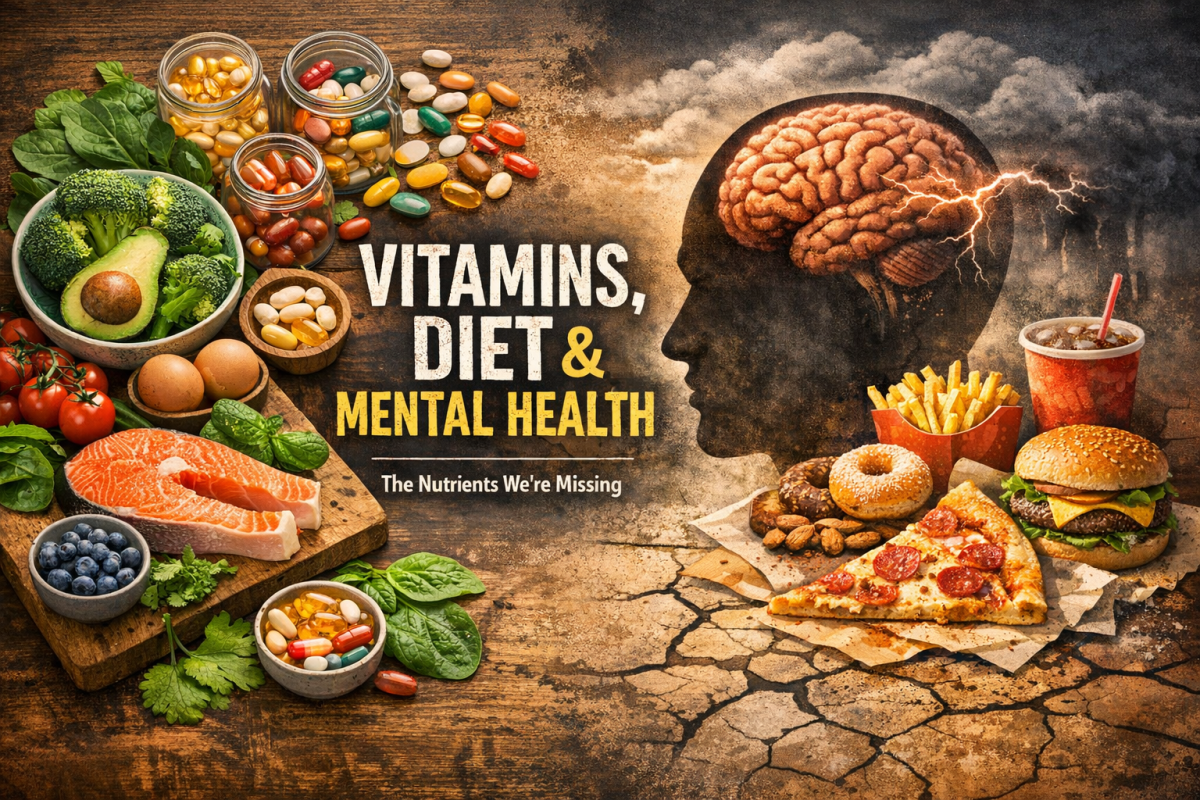
Walk into any grocery store in America and you’ll see the same paradox: aisles overflowing with food, yet a population quietly starving for nutrients that actually support the brain, mood, and long‑term health. It’s one of the great contradictions of the modern American diet — abundance without nourishment.
We talk a lot about calories. We talk a lot about protein. But we rarely talk about the vitamins that keep our minds stable, our energy consistent, and our emotional resilience intact. And in a country where convenience foods dominate and stress levels are sky‑high, that gap is starting to show.
The Vitamin Deficit Hidden in Plain Sight
Despite living in one of the wealthiest food environments in the world, Americans are chronically low in several key vitamins tied directly to mental health:
Vitamin D — essential for mood regulation
B vitamins — crucial for energy, focus, and nervous system stability
Omega‑3s — foundational for brain health and emotional balance
Magnesium — supports sleep, stress response, and muscle relaxation
These aren’t fringe nutrients. They’re the biochemical backbone of feeling human.
Yet the Standard American Diet (SAD) — heavy on processed grains, added sugars, and industrial oils — leaves millions undernourished in ways that don’t show up until the symptoms do: irritability, fatigue, brain fog, anxiety spikes, and emotional volatility.
The Food–Mood Connection Isn’t Woo — It’s Biochemistry
Mental health isn’t just psychological. It’s nutritional.
Your brain is a nutrient‑hungry organ, and when it doesn’t get what it needs, it sends signals — sometimes subtle, sometimes loud.
Low B12 can mimic depression.
Low magnesium can heighten anxiety.
Low vitamin D can flatten mood and motivation.
Low omega‑3s can impair emotional regulation.
This is why so many clinicians now consider nutritional status a foundational part of mental health care. It’s not a replacement for therapy or medication — it’s the soil those interventions grow in.
If you want to explore how vitamins fit into a holistic care model, HIAAH has a helpful overview of their approach here: Vitamin Services at HIAAH .
Why the American Diet Makes This Harder Than It Should Be
The modern food system is optimized for:
Shelf life
Speed
Cost
Convenience
It is not optimized for micronutrient density.
Fresh produce is expensive. Cooking takes time. Ultra‑processed foods are engineered to be irresistible. And the result is a population that is technically fed but nutritionally fragile.
This fragility shows up in our mental health statistics long before it shows up in our lab work.
Reclaiming Nutritional Sanity, One Habit at a Time
You don’t need a perfect diet to support your mental health — you just need a more intentional one.
A few high‑impact shifts:
Add one leafy green to your daily routine.
Swap one processed snack for a whole‑food option.
Prioritize foods rich in omega‑3s (salmon, walnuts, flax).
Consider a vitamin D supplement if you live in a low‑sun region.
Small changes compound. And when the goal is mental clarity, emotional steadiness, and long‑term resilience, those changes matter more than we’ve been taught to believe.
Navigating the maze of mental health services can feel like deciphering an ancient code. Yet, here we are, ready to lay out the map. Whether you’re in the throes of a crisis or on a steady path to better managing your mental health, immediate support is a text or call away with the Veterans Crisis Line and the 988 Crisis Lifeline.
We understand the urgency of finding the right health care provider. It’s like matchmaking; not everyone will be your cup of tea. For starters, your primary care provider can serve as a compass, pointing you toward the most suitable services. Don’t forget, resources like SAMHSA and the Department of Veterans Affairs are like the North Star for finding mental health care.
But it’s not all about crises. For the warriors among us, medical center resources and community mental health services stand ready, regardless of discharge status. And for the digital natives, or those of us who just prefer to text than talk, online mental health platforms offer a bridge to support.
Let’s not overlook our youth. Tailored youth programs tackle emotional and behavioral challenges early on. It’s like catching a leak before it floods the basement—prevention is always better than cure.
For our veterans, the arsenal of mental health resources is vast. From PTSD treatments at VA medical centers to support networks like NAMI, help is but a step away. And remember, support is available Monday through Friday, and beyond. Your mental well-being is a priority, every day of the week.
Key Takeaways
In the universe of mental health, it’s a jungle out there. But fear not, we’re here to be your guides. From the dark clouds of a crisis to the pursuit of long-term management, there’s a light at the end of the tunnel. Immediate assistance is closer than you think, with the Veterans Crisis Line and the 988 Crisis Lifeline being your beacons of hope.
Finding the right health care provider shouldn’t be like finding a needle in a haystack. Think of your primary care provider as your personal GPS, guiding you to the mental wellness path that suits you best. And when in doubt, the Substance Abuse and Mental Health Services Administration (SAMHSA) and the Department of Veterans Affairs are your go-to directories for finding top-notch care.
But what about after the storm passes? Whether you’re a seasoned warrior or a digital native, there’s a spectrum of resources waiting. Medical center facilities and community-driven initiatives stand ready to support, no matter your discharge status. And for those who prefer tapping on a screen to talking, online platforms have got your back.
Let’s not forget the young ones. Initiatives geared toward our youth aim to catch and address emotional and behavioral hurdles early—prevention is the name of the game.
And to our veterans, we salute you. Your battlefield might have changed, but the resources at your disposal are vast and mighty. From PTSD treatments at VA medical centers to the camaraderie found in support networks like NAMI, you’re never alone. Help is available Monday through Friday, and every day in between. Your mental well-being is our mission, every step of the way.
Accessing Immediate Help and Support
If you’re in urgent need of support, help is closer than you might think. Emergency mental health care is accessible 24/7, offering a lifeline during crisis moments. Reach out to dedicated services like the Veterans Crisis Line or the 988 Suicide & Crisis Lifeline for immediate assistance. They’re just a call or text away, providing a listening ear and necessary interventions at any hour.
For those looking to navigate the maze of mental health resources, start by consulting a primary care provider. They can perform initial screenings and offer referrals to specialists. Organizations such as SAMHSA and the Department of Veterans Affairs are invaluable for connecting with mental health services that suit your needs. Whether it’s counseling, therapy, or medication, options are plentiful and varied.
Don’t overlook the convenience of online mental health care. Digital platforms offer telehealth services and self-help tools, making support accessible from the comfort of your home.
Finding the Right Health Care Provider
In our search for the right healthcare provider, we often overlook the wealth of mental health resources available to us. The Substance Abuse and Mental Health Services Administration (SAMHSA) and the Department of Veterans Affairs (VA) provide a solid starting point. They offer an array of services from Monday through Friday, making the process less overwhelming.
For those requiring more specialized care, consulting with a primary care provider might reveal referrals to suitable medical centers or community mental health facilities. These centers are hubs of support, offering everything from counseling to medication management.
And let’s not forget about the digital sphere. Telehealth services have surged in popularity, offering convenience without compromising on quality. For veterans, the VA’s telemental healthcare services are a click away, bridging the gap between need and support effectively.
Seeking help is a sign of strength. With so many options at our fingertips, finding the right healthcare provider has never been easier.
Navigating Mental Health Care Options
Exploring options for mental wellness care can sometimes feel like solving a complex puzzle. Yet, the right piece can click into place with a bit of guidance. For immediate assistance, the Veterans Crisis Line and the 988 Suicide & Crisis Lifeline offer round-the-clock support. These lifelines are critical for those moments when you need a voice of calm and direction immediately.
Identifying the most fitting healthcare provider often starts with a conversation with your primary care physician, who can provide initial screenings and guide you toward the appropriate mental health services. The Substance Abuse and Mental Health Services Administration (SAMHSA) and the Department of Veterans Affairs (VA) are invaluable resources in this search, especially for veterans needing access to a medical center or specialized care.
For veterans, accessing treatments through VA medical centers is streamlined, needing no regard to discharge status or VA healthcare eligibility. Whether it’s Monday through Friday or a weekend crisis, help is within reach.
Online Mental Health Services Explained
Delving into the specifics of online mental health services, we find an array of digital resources at our fingertips. The Veterans Affairs (VA) offers telemental healthcare, making counseling and therapy accessible from the comfort of home. Equally convenient is the Veteran Training online self-help portal, a boon for those preferring self-guided support.
For those of us juggling busy schedules, the flexibility of accessing care Monday through Friday without the constraint of office hours is a game-changer. It bridges the gap for individuals facing mental health problems, offering a lifeline in times of need.
Connecting with peer support networks or finding the right health care provider has been simplified, thanks to the Substance Abuse and Mental Health Services Administration (SAMHSA) and resources like Military OneSource. These platforms provide not just support but a community for those on their healing journeys.
Connecting with Peer Support Networks
Building bridges to peer support groups offers a powerful tool in our arsenal against mental health problems. The camaraderie found in these circles, especially through initiatives like the Military OneSource peer assistance program, provides a sense of belonging and mutual support that’s hard to find elsewhere. It’s like having a battle buddy by your side, someone who truly gets it.
Identify your needs – Are you looking for empathy, advice, or both?
Research – Not all groups are created equal. Look for ones that match your vibe.
Engagement – Active participation can magnify the benefits.
Respect privacy – What’s shared in the group, stays in the group.
Give back – Sharing your own experiences can help others too.
Remember, it’s okay to test the waters before you jump in. And if the shoe doesn’t fit, try another size. There’s a community out there for everyone, ready to bolster your path to wellness with the right mental health resources.
Community Mental Health Resources
In our pursuit to support those facing mental health problems, we’ve mapped out a guide to effortlessly find mental health resources. If you or someone you know is in immediate need of assistance, services are accessible 24/7. For those not facing urgent concerns, health care professionals, including those at your local medical center, can provide screenings and refer you to specialized help.
We understand the weekends can be tough, which is why resources are not just a Monday through Friday affair. For veterans, connecting with peer support or exploring options at a VA medical center can be a game-changer, regardless of discharge status. And let’s not forget, the digital domain offers telehealth services, making it easier to access care from the comfort of home.
Finding the right support network is like finding the right pair of jeans – it might take a few tries, but once you find that perfect fit, the comfort is undeniable.
Youth Programs and Support Services
In addressing the needs of younger individuals, our focus shifts to programs aimed at supporting their emotional and behavioral development. Early intervention plays a pivotal role in the well-being of our youth, especially when it comes to tackling mental health problems. We’ve pinpointed services that specialize in assisting children and adolescents navigate the challenges they face, emphasizing the importance of accessible health care.
For those moments when immediate help is a must, emergency services remain on standby around the clock. Yet, the cornerstone of our approach lies in prevention and early support, guiding our young ones through tough times with a gentle hand. We encourage families to seek guidance from trained professionals who understand the nuances of youth mental wellness.
Our commitment stands firm: to guide, support, and uplift the spirits of the younger generation, steering them toward a path of resilience and emotional health.
Top 5 Mental Health Resources for Veterans
Exploring the top support systems for our nation’s heroes, we pinpoint five invaluable avenues for health care assistance.
VA Medical Centers offer a broad spectrum of care, focusing on both physical and psychological well-being, making them a cornerstone of veteran support.
Vet Centers provide a more intimate setting for counseling and community, offering services in a confidential and supportive environment.
Military OneSource extends a helping hand with its array of counseling options, available both online and in person, to suit different needs and schedules.
The National Alliance on Mental Illness (NAMI) introduces veterans and their families to programs and education aimed at combating stigma and fostering community.
VA’s Telehealth Services bridge the distance, bringing support directly to those who may face obstacles in accessing traditional care settings.
These resources stand as beacons, guiding our veterans through their journeys, assuring them they’re not marching alone.
Conclusion
We’ve walked through the maze of mental health services together, uncovering the layers of support available. From emergency hotlines like the Veterans Crisis Line to the seamless access of the 988 Suicide & Crisis Lifeline, we’ve underscored the lifelines that are just a call away. It’s reassuring to know that, in moments of crisis, these services stand ready to offer a helping hand.
Finding the right healthcare provider might feel like searching for a needle in a haystack, but it’s far from impossible. We’ve highlighted how starting with a primary care provider can open doors to specialized referrals. For those who’ve served, the VA’s resources are a goldmine, offering a spectrum of mental health services. And let’s not forget the SAMHSA and VA databases; they’re akin to a compass, guiding you to the right care.
In our exploration, the promise of telehealth shines bright, offering convenience and accessibility. It’s a bridge across the digital divide, bringing healthcare to your fingertips. For veterans, the VA’s telemental health services and the Veteran Training online portal underscore the commitment to accessible care. Peer support networks, too, offer a sense of belonging, a reminder that no one walks this path alone. Whether it’s through Vet Centers or community resources, the message is clear: support is all around.
Our venture into the mental health services available, especially for our veterans, is a reminder of the strength found in asking for help. As we conclude, remember that these resources, from Vet Centers to the National Alliance on Mental Illness (NAMI), are beacons of hope. They stand as testaments to the resilience within and the community’s unwavering support. Armed with this knowledge, taking the step toward mental wellness is not just a possibility—it’s a promise of a brighter tomorrow.
FAQ
How do I get immediate help for a mental health crisis? If you’re in a crisis, it’s critical to know help is just a call away. The 988 Suicide & Crisis Lifeline and the Veterans Crisis Line offer 24/7 support. Just dial the numbers, and you’ll find someone on the other end ready to help you through. It’s like having a lifeline in your pocket.
How can I find the right mental health care provider for me? Finding the right provider starts with a chat with your primary care doctor, who can steer you in the right direction. Don’t forget, resources like SAMHSA and the Department of Veterans Affairs are gold mines for locating services geared toward your needs. It’s a bit like matchmaking, but for your mental health.
What mental health care options are available to veterans? Veterans have a buffet of options available through VA medical centers. Whether it’s counseling, therapy, or medication, there’s something for everyone. And you don’t need to have a perfect discharge status to access these services. It’s the VA’s way of saying, “We’ve got your back,” no matter what.
Are there online services for mental health care? Absolutely, the digital leap in healthcare means you can access support from the comfort of your home. VA’s telehealth services and the Veteran Training online portal are just a click away. It’s like having a therapist in your living room, minus the couch.
What about connecting with others who understand what I’m going through? Peer support networks are a gem. Programs like Military OneSource let you connect with folks who’ve walked a mile in your shoes. It’s comforting to know there’s a community out there that gets it, ready to lift you up when you’re feeling down. It’s like finding your tribe, a group that truly understands the beat of your drum.
As a friend of a parent, I never thought I’d face the daunting challenge of navigating their teenager’s mental illness. But life had other plans. When their child struggled with anxiety and depression, we all felt lost and helpless. The journey was dark and isolating, but it also opened my eyes to the silent crisis affecting countless teenagers under 16.
Trauma, addiction, and suicide rates are skyrocketing among our young people. The statistics are staggering: 1 in 4 teenagers experiences a mental health disorder, 1 in 5 has considered suicide, and 1 in 10 has attempted it. The reality is grim, but we can’t afford to look the other way. It’s time for the Boomer generation to step up and support the younger generation in their fight for mental wellness.
Trauma, often resulting from Adverse
Childhood Experiences (ACEs), leaves horrible deep scars that can last a lifetime. Teenagers face unprecedented pressures, from social media’s curated highlight reels to academic expectations and bullying. It’s no wonder they’re turning to addiction – whether substance abuse, social media, or technology – to cope. But this temporary escape only worsens the problem.
Suicide rates are the devastating consequence of untreated mental health issues. We’ve lost too many bright, promising lives to the silence and stigma surrounding mental illness. We must create a safe space for teenagers to share their real struggles without fear of judgment.
So, what can the Boomer generation do to make a difference? Invest in proven mental health resources and support services. Fund research and initiatives focused on teen mental wellness. Offer mentorship and intergenerational connections to provide guidance and hope. Your wealth and influence can be a powerful force for change.
There are inspiring stories of teenagers who have overcome trauma, addiction, or suicidal thoughts. They prove our young people can thrive with the proper support and resources. Successful programs and initiatives are positively impacting, from school counseling services to community-based organizations offering a haven for teenagers.
It’s time for the Boomer generation to engage in conversations, volunteer, and support organizations addressing teen mental health. Let’s break the silence and shine a light on this critical issue. Together, we can create a brighter future where teenagers can access the help they need.
Resources:
National Suicide Prevention Lifeline (1-800-273-TALK)
I am sharing this post to show my appreciation for Connecticut’s healthcare facilities. A close family member of mine had a tough time getting the care they needed, so it’s essential to highlight the top-rated facilities in the area. I cannot stress enough how crucial it is to find a suitable healthcare facility, especially when dealing with a mental health crisis. The facility that helped my family member the most was the best-rated one, and I highly recommend it. I encourage everyone to seek help for themselves or their loved ones without hesitation or fear of judgment. Remember, seeking help can save someone’s life and make all the difference.
It is a fact that putting your mental health and physical well-being at the top of your priority list impacts your overall quality of life. Finding the proper support and treatment that suits your needs is vital. Connecticut is known for its exceptional healthcare facilities and boasts some of the nation’s most highly rated mental health hospitals. In this article, we will delve into Connecticut’s best mental health hospitals and equip you with all the necessary information to make an informed decision regarding your mental health care.
Yale New Haven Hospital – New Haven, CT:
This hospital is number one in my book! Yale New Haven Hospital is consistently ranked as one of the top hospitals in the United States and is renowned for its exceptional mental health services. The hospital provides tailored treatment programs for serious mental health issues, such as severe anxiety disorders, depression, bipolar disorder, and schizophrenia. With a team of highly skilled psychiatrists, psychologists, and therapists, Yale New Haven Hospital provides in-depth and personalized treatment healing plans for patients of all ages. The hospital also offers innovative research programs and clinical trials, ensuring patients have access to the latest advancements in mental health care.
Hartford Hospital Institute of Living – Hartford, CT:
The Institute of Living, a division of Hartford Hospital, is another top-rated mental health hospital in Connecticut. With over 200 years of experience providing mental health care, the Institute of Living offers a multidisciplinary approach to treatment, combining psychiatry, psychology, and social work. The hospital specializes in treating mood disorders, personality disorders, and addiction. With a focus on evidence-based practices and high-end research, the Institute of Living provides patients with the highest quality of care. The hospital also offers outpatient services, including therapy and support groups, to ensure ongoing patient support after their hospital stay.
Silver Hill Hospital – New Canaan, CT:
Located in New Canaan, Silver Hill Hospital is a renowned mental health facility providing compassionate care for over 85 years. This old hospital offers a comprehensive range of inpatient and outpatient care services for adults and adolescents struggling with mental health issues. With a team of experienced psychiatrists, therapists, and social workers, Silver Hill Hospital provides individualized treatment plans tailored to each patient’s unique needs. The hospital specializes in treating mood disorders, anxiety disorders, and addiction, offering a holistic approach that addresses physical and emotional aspects of mental health.
Connecticut Mental Health Center – New Haven, CT:
As a collaboration between the State of Connecticut and Yale University, the Connecticut Mental Health Center (CMHC) is a leading provider of mental health services in the state. The center offers outpatient services, including individual counseling, group therapy, and medication management. CMHC also provides specialized programs for individuals with co-occurring mental health and substance use disorders. Focusing on recovery-oriented care, CMHC empowers individuals to take an active role in their treatment and supports them in their journey toward mental wellness.
Conclusion:
Mental health is real! Regarding mental health hospitals, Connecticut offers some of the best facilities in the country. Whether you seek inpatient or outpatient care, specialized treatment for a specific mental health condition, or a comprehensive approach to mental wellness, Connecticut’s top-rated mental health hospitals have you covered. From the renowned Yale New Haven Hospital to the historic Institute of Living and the compassionate care provided by Silver Hill Hospital and Connecticut Mental Health Center, you can trust that you will receive quality care for your mental health needs in Connecticut. Remember, accepting help is a sign of strength, and with the proper support, you can achieve mental wellness and lead a fulfilling life.





 The Red Alert Blog