Categories
Food fun stuff Uncategorized

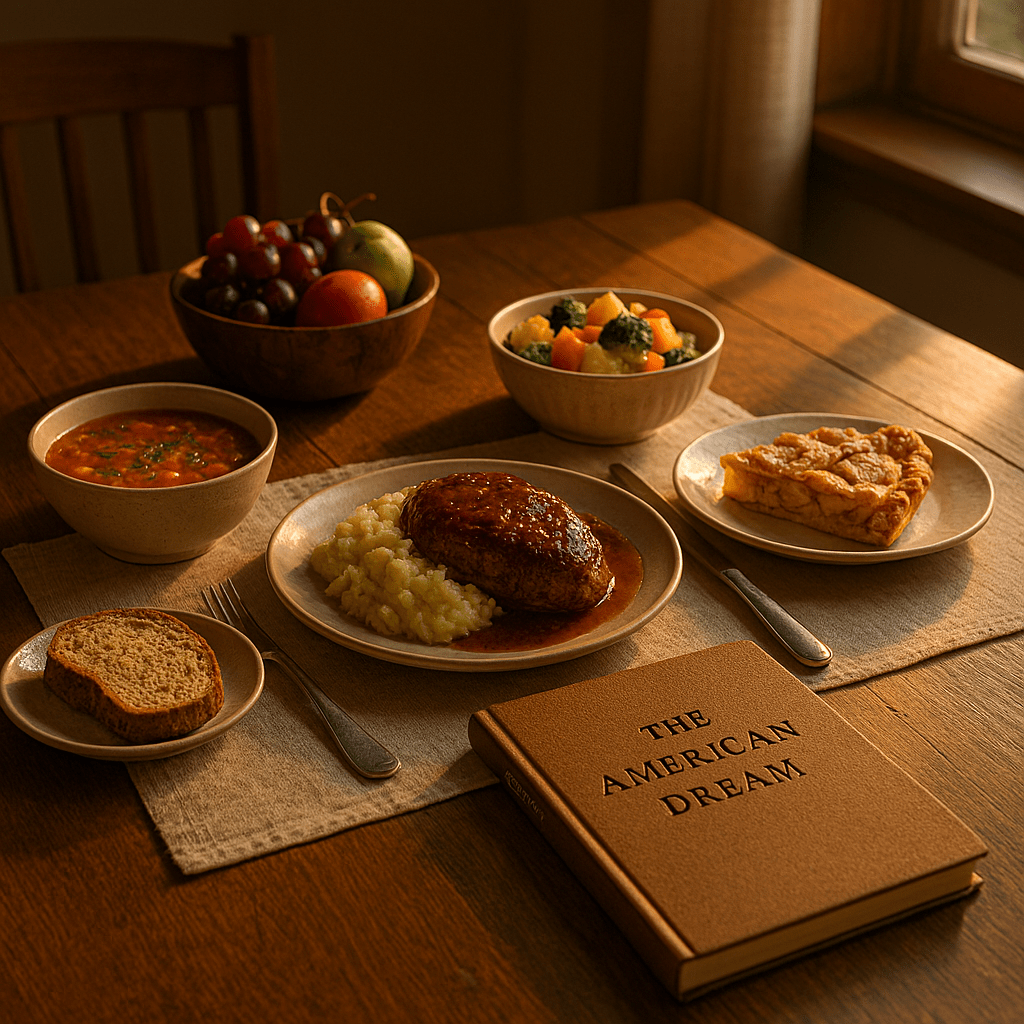
🍽️ THE FOUR‑COURSE AMERICAN DREAM

How Culture, Economics, History, and the Dinner Table Could Save the Future

🥗 COURSE ONE: THE APPETIZER — The American Dream You Could Taste

If you want to know how a nation is doing, don’t look at the stock market.
Look at the dinner table.

Food is the first place where economic pressure shows up.
It’s the first place where culture evolves.
It’s the first place where families feel the squeeze — or the relief.

And right now, the American table is telling a story we can’t afford to ignore.

There was a time — not that long ago — when the American Dream wasn’t a mansion or a yacht.
It was a kitchen.

A small home.
A family table.
A pot of something simmering.
A sense of stability you could feel in the air.

Food was the heartbeat of the Dream:

  • Sunday dinners
  • Holiday spreads
  • Neighborhood cookouts
  • Recipes passed down like treasure

And here’s the part that matters:
In 1970, the average American could realistically secure the seven pillars of the American Dream — a home, a family, education, healthcare, transportation, retirement security, and upward mobility — in about 30,000 hours of work.

That’s roughly 15 years of full‑time effort.

Fifteen years to build a life.
Fifteen years to create a home where food wasn’t a luxury — it was a ritual.

Today, that Dream costs 103,800 hours — nearly 52 years.

The Dream didn’t disappear.
It just drifted off the table.


🍲 COURSE TWO: THE MAIN DISH — The Cost of Living and the National Debt

Here’s the part most people don’t connect:
The national debt isn’t an abstract number.
It’s a kitchen‑table issue.

When the debt grows faster than the economy, the cost of living rises in ways families feel immediately — especially in food.

How debt hits the dinner table:

  • Higher interest rates → higher costs for farmers, producers, and transport
  • Inflation → groceries become unpredictable
  • Crowded‑out public investment → weaker infrastructure and higher long‑term costs
  • Wage stagnation → every dollar buys less

This is how we went from 30,000 hours to 103,800 hours in two generations.

And yet, there’s a path back.

Not through austerity.
Not through fantasy.
But through something America has done before:
a windfall.

A windfall can be:

  • A technological boom
  • A resource boom
  • A productivity boom
  • A cultural boom

But the most powerful windfall isn’t financial.
It’s cultural.


🍛 COURSE THREE: THE SIDE DISH — The Cultural Windfall

Every society reaches a moment when greed stops being cool.

The Gilded Age had its moment.
The Roaring Twenties had theirs.
The 1980s excess eventually gave way to minimalism and sustainability.

America is approaching another one of those moments.

People are tired of spectacle.
Tired of noise.
Tired of the feeling that the Dream is slipping away no matter how hard they work.

A cultural windfall happens when society collectively decides to value:

  • Stability over status
  • Community over consumption
  • Legacy over luxury
  • Stewardship over spectacle

And here’s the twist:
When culture shifts, the wealthy shift with it.

Not because they’re forced to.
But because stewardship becomes the new status symbol.

Why the wealthy would choose to give back:

  • Stability is good for markets
  • A strong middle class is good for business
  • Legacy matters
  • Voluntary contribution beats unpredictable policy
  • Responsibility becomes prestigious

It’s the difference between showing off a $500 steak and showing off a community kitchen you funded.

One is indulgence.
The other is legacy.

A cultural windfall doesn’t just change attitudes.
It changes behavior.
And behavior changes economies.


🍰 COURSE FOUR: DESSERT — History’s Proof That Culture Can Save Economies

This isn’t wishful thinking.
History is full of moments where cultural shifts reshaped economies.

Athens

Wealthy citizens funded ships, festivals, and infrastructure because generosity was admired and greed was mocked.

Rome (Republic era)

Elites built roads, aqueducts, and public works because civic virtue was the currency of status.

The Islamic Golden Age

Charitable endowments built hospitals, universities, and social systems — not through taxation, but cultural expectation.

Medieval Europe

Merchant families funded cathedrals, bridges, and schools because public giving earned honor.

The Progressive Era

A backlash against Gilded Age excess led to philanthropy booms, public health reforms, and worker protections.

Post‑WWII Reconstruction

Shared sacrifice and cultural unity rebuilt entire nations.

Modern ESG movements

Companies now compete to appear responsible — not just profitable.

History is clear:
When culture shifts, economies follow.


THE FINAL SIP — Bringing the Dream Back Under 15,000 Hours

A cultural windfall — paired with smart economic choices — could:

  • Lower inflation
  • Stabilize interest rates
  • Strengthen wages
  • Reduce long‑term debt pressure
  • Make essentials affordable again
  • Bring the American Dream back into reach

Not in 52 years.
Not in 30 years.
But potentially back toward 15,000–30,000 hours — a human‑sized goal.

And food becomes the symbol of the turnaround:

When the economy stabilizes, the table stabilizes.
When the table stabilizes, the Dream stabilizes.
When the Dream stabilizes, America stabilizes.

The American Dream used to be something you could taste.
It can be again.
Categories
Food Healthy life style Uncategorized

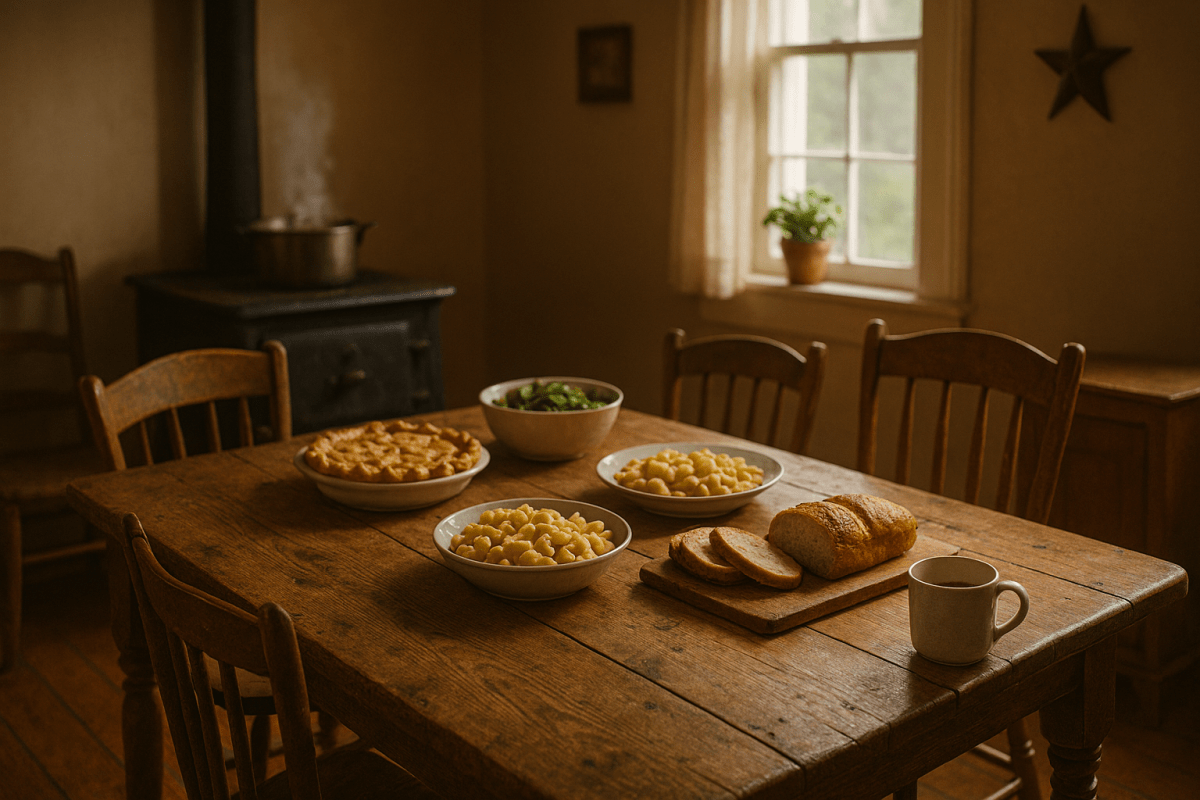
🍽️ The American Dream Used to Start in the Kitchen — Now It’s Slipping Off the Table

Food lovers understand something most people overlook:
If you want to know how a nation is doing, look at its dinner table.

Food is the first place where economic pressure shows up.
It’s the first place where culture evolves.
It’s the first place where families feel the squeeze — or the relief.
And right now, the American table is telling a story we can’t afford to ignore.

This isn’t nostalgia.
This is a wake‑up call.

Because the American Dream used to be something you could taste.
Now it’s something many people can barely afford to smell.


🍳 When the American Dream Was Served Hot

Ask anyone who grew up in the 60s or 70s what the American Dream looked like, and they won’t describe a mansion or a yacht. They’ll describe a kitchen.

A small home.
A family table.
A pot of something simmering.
A sense of stability you could feel in the air.

Food was the heartbeat of the Dream.
Sunday dinners.
Holiday spreads.
Neighborhood cookouts.
Recipes passed down like treasure.

And here’s the part that matters:
In 1970, the average American could realistically secure the seven pillars of the American Dream — a home, a family, education, healthcare, transportation, retirement security, and upward mobility — in about 30,000 hours of work.

That’s roughly 15 years of full‑time effort.

Fifteen years to build a life.
Fifteen years to create a home where food wasn’t a luxury — it was a ritual.


🥘 Food Culture Exploded — But So Did the Cost of Living

Fast‑forward to today.

We live in a golden age of flavor.
Global ingredients.
Fusion cuisine.
Farm‑to‑table everything.
Food shows, food influencers, food tourism, food obsessions.

Our plates got more exciting.
Our grocery bills got more painful.

Because while food culture expanded, the American Dream shrank.

By 2025, the time cost of achieving that same seven‑pillar Dream skyrocketed to 103,800 hours — nearly 52 years of full‑time work.

Let that sink in.

The Dream that once took 15 years now takes almost an entire working lifetime.

And food lovers feel this shift first.


🍲 Food People Notice the Cracks Before Anyone Else

If you love food, you pay attention.
You notice when a dozen eggs jumps from $1.29 to $6.49.
You notice when a simple grocery run feels like a luxury outing.
You notice when restaurants quietly raise prices, shrink portions, or cut corners.

You notice when:

  • A family dinner becomes a budgeting exercise
  • A holiday feast becomes a financial stretch
  • A night out becomes a rare indulgence
  • A home‑cooked meal becomes the only viable option

Food is the canary in the coal mine of the American Dream.
And right now, that canary is wheezing.


🍕 The Dream Used to Arrive in Your 30s — Now It Shows Up in Your 60s

In 1970, you could expect to:

  • Buy a home
  • Raise a family
  • Build a life
  • And still have time to enjoy it

By your mid‑30s.

Today?

The Dream doesn’t arrive in your 30s.
Or your 40s.
Or even your 50s.

For many Americans, it arrives — if at all — in their late 60s.

That’s not a dream.
That’s a delay.

And it changes everything about how we eat, gather, celebrate, and live.


🥗 But Food Is Still Where Hope Lives

Here’s the twist:
Food lovers are some of the most resilient people on the planet.

We adapt.
We create.
We stretch ingredients.
We reinvent traditions.
We turn scarcity into creativity.

Food people know how to make something out of nothing.
We know how to turn a cheap cut into a masterpiece.
We know how to turn a small kitchen into a sanctuary.
We know how to turn a shared meal into a moment of abundance.

Food is still the most democratic joy we have left.
It’s still the place where connection happens.
It’s still the place where the Dream feels alive — even when everything else feels out of reach.


🍽️ The New American Dream Starts With a Table, Not a Mortgage

Maybe the American Dream isn’t dead.
Maybe it’s evolving.

Maybe it’s becoming less about owning things and more about experiencing things.
Less about square footage and more about connection.
Less about climbing and more about savoring.

Food lovers are leading that shift.

Because when you cook for someone, you’re saying:

  • You matter
  • You belong
  • You’re welcome
  • We’re in this together

And that’s the heart of the American Dream — not the house, not the car, not the paycheck, but the table.

A place where people gather.
A place where stories are shared.
A place where life slows down.
A place where the Dream still feels possible.


🍰 If You Love Food, You’re Already Rebuilding the Dream

Food lovers are the memory‑keepers.
The culture‑carriers.
The community‑builders.
The ones who remind the world that joy doesn’t have to be expensive.

You don’t need a 3,000‑square‑foot house to make a great meal.
You don’t need a six‑figure income to create a moment of magic.
You don’t need the old American Dream to live a meaningful life.

You just need a kitchen.
A table.
A recipe.
A story.
A willingness to share.

Food is how we reclaim the Dream — not by chasing what used to be, but by creating what comes next.

Design a site like this with WordPress.com
Get started