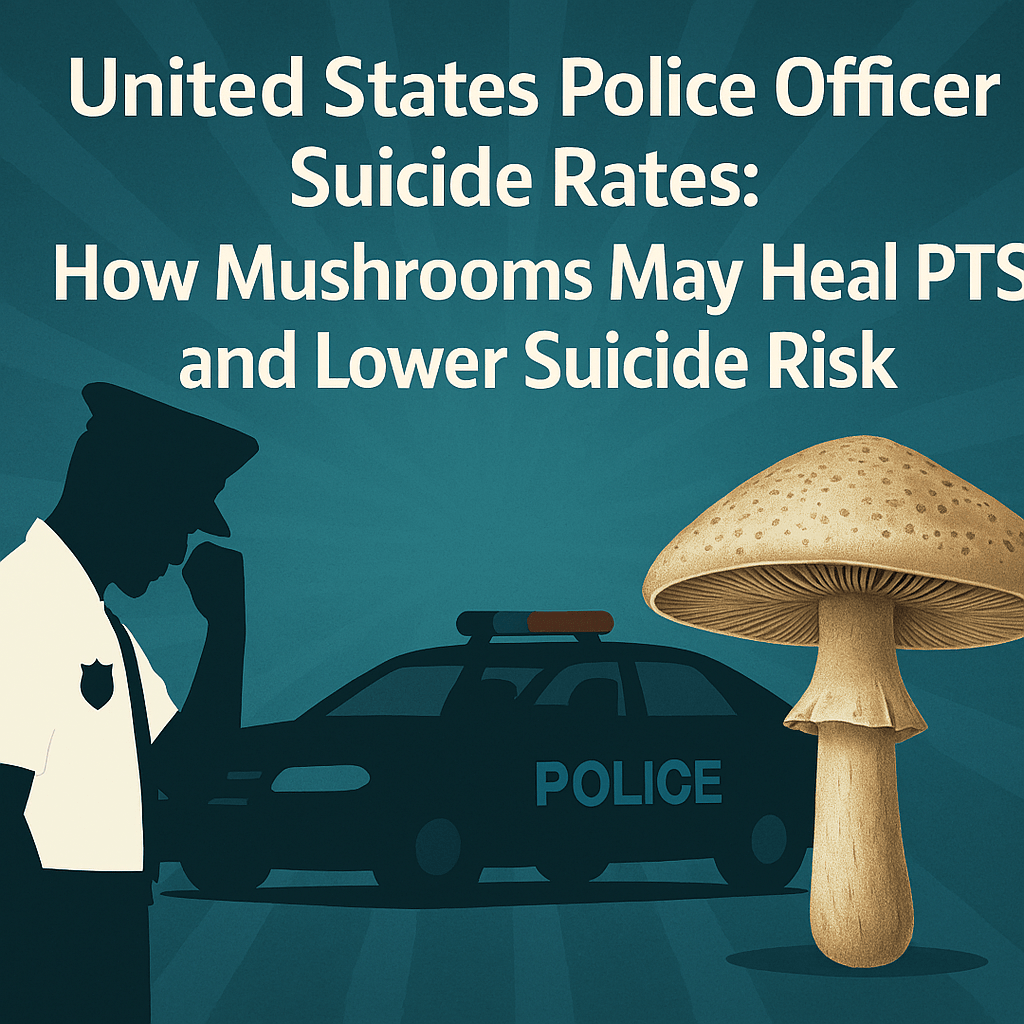
The Crisis of Police Officer Suicide in the United States 🚨
In a country that reveres its protectors, the mental health of police officers is often overlooked. Suicide rates among U.S. law enforcement are alarmingly high—2022 saw the most recorded deaths by suicide since 2019. And according to SoundThinking, the true numbers may be even higher due to underreporting.
As someone passionate about holistic healing and immune-boosting foods, I (Amanda Leerow) couldn’t ignore the growing evidence that mushrooms—especially psilocybin—may offer a path to healing. This post explores how these natural compounds could help officers struggling with PTSD and suicidal ideation.
Understanding Police Officer Suicide Rates in the United States 📊
Recent Trends: In 2023, 122 officers died by suicide. While slightly lower than 2022, the numbers remain deeply concerning.
Key Risk Factors:
Chronic exposure to trauma
Sleep disruption and hypervigilance
Stigma around seeking help
Lack of personalized mental health support
Impact: The loss of an officer affects families, departments, and communities. It’s a wound that ripples outward.
The SoundThinking blog emphasizes how depression affects officers at nearly double the rate of the general population—12% vs. 6.8%. Clearly, traditional approaches aren’t enough.
The Role of PTSD in Law Enforcement Suicide 🧠
PTSD is a silent epidemic in law enforcement. Officers face repeated exposure to violence, death, and human suffering. Over time, this leads to:
Emotional detachment
Flashbacks and nightmares
Isolation and burnout
Suicidal ideation
In Trump’s Surgeon General Endorses Psychedelic Therapy, former Surgeon General Jerome Adams discusses how psychedelics like psilocybin may offer new hope for those battling trauma—including first responders.
The Science Behind Mushrooms for PTSD: What the Research Shows 🍄
Psilocybin, the active compound in “magic mushrooms,” interacts with serotonin receptors and can induce profound emotional breakthroughs. Research shows:
Neuroplasticity Boost: Psilocybin promotes brain rewiring, helping break cycles of depression and trauma.
Emotional Processing: It allows suppressed emotions to surface and be integrated.
Clinical Trials: Studies at Johns Hopkins and NYU show significant reductions in PTSD and depression symptoms after guided psilocybin sessions.
In Joe Rogan Experience #1035 – Paul Stamets, mycologist Paul Stamets explains how psilocybin mushrooms may help reframe traumatic memories and restore emotional balance. He also discusses the potential of stacking psilocybin with lion’s mane and niacin to enhance neurogenesis—a concept that could revolutionize PTSD treatment.
It’s important to distinguish between:
Psilocybin mushrooms: Used in psychedelic therapy
Functional mushrooms: Like lion’s mane and reishi, which support general brain and immune health
Real-World Experiences: Police, PTSD, and Psilocybin Therapy 👮♂️➡️
Some officers are already exploring psychedelic therapy—and few voices are more compelling than Sarko Gergerian’s.
In Joe Rogan Experience #2357, Gergerian—a law enforcement professional and mental health counselor—shares his journey of integrating psychedelic self-care into his recovery from trauma. As a founding member of CLEAR (Community and Law Enforcement Assisted Recovery), he’s pioneering a recovery-oriented policing model that embraces holistic healing, including psilocybin therapy.
Gergerian’s story is groundbreaking because:
He speaks from lived experience as both a cop and a counselor.
He advocates for psychedelics not as escapism, but as structured, intentional healing.
He emphasizes the importance of community, integration, and ethical access to these therapies.
His appearance on Rogan’s podcast is a watershed moment for psychedelic advocacy in law enforcement. It shows that change is not only possible—it’s already happening.
Other examples include:
Randy Weaver’s Story: A New York police officer and army veteran diagnosed with PTSD in 2007, Randy shares his healing journey through psilocybin in Heroic Hearts Project on Instagram.
Veteran Retreats: Organizations like Heroic Hearts and TheraPsil offer guided psychedelic experiences for first responders and veterans.
Challenges remain:
Legal restrictions (psilocybin is still federally illegal)
Ethical concerns around treatment access
Need for trained facilitators and safe environments
But Gergerian’s voice adds weight to the movement. His work bridges the gap between law enforcement culture and progressive mental health care—making psilocybin therapy not just plausible, but necessary.
Suicide Prevention Strategies for Law Enforcement: Where Mushrooms Fit In 🛡️
Traditional programs include peer support, therapy dogs, and mobile wellness apps. But they often fall short due to stigma and lack of personalization.
Psilocybin-assisted therapy could:
Complement existing mental health programs
Offer breakthroughs where talk therapy stalls
Help officers reconnect with purpose and community
The SoundThinking article highlights how technology and trauma-informed care are improving officer wellness. Psilocybin could be the next frontier—if policy and public perception evolve.
Conclusion: Hope for Healing and Reducing Police Officer Suicide Rates 🌱
Police officers deserve more than medals—they deserve healing. Addressing PTSD and mental health isn’t just compassionate; it’s essential for public safety.
Mushrooms, once misunderstood, are now emerging as powerful tools for transformation. With continued research, advocacy, and destigmatization, psilocybin therapy could help save lives and restore hope to those who protect and serve.
Not sure what you can do to help push this to the world? Let’s support further research, push for policy reform, and create safe access to psychedelic therapy for law enforcement. Because behind every badge is a human being who deserves to heal.
Navigating the maze of mental health services can feel like deciphering an ancient code. Yet, here we are, ready to lay out the map. Whether you’re in the throes of a crisis or on a steady path to better managing your mental health, immediate support is a text or call away with the Veterans Crisis Line and the 988 Crisis Lifeline.
We understand the urgency of finding the right health care provider. It’s like matchmaking; not everyone will be your cup of tea. For starters, your primary care provider can serve as a compass, pointing you toward the most suitable services. Don’t forget, resources like SAMHSA and the Department of Veterans Affairs are like the North Star for finding mental health care.
But it’s not all about crises. For the warriors among us, medical center resources and community mental health services stand ready, regardless of discharge status. And for the digital natives, or those of us who just prefer to text than talk, online mental health platforms offer a bridge to support.
Let’s not overlook our youth. Tailored youth programs tackle emotional and behavioral challenges early on. It’s like catching a leak before it floods the basement—prevention is always better than cure.
For our veterans, the arsenal of mental health resources is vast. From PTSD treatments at VA medical centers to support networks like NAMI, help is but a step away. And remember, support is available Monday through Friday, and beyond. Your mental well-being is a priority, every day of the week.
Key Takeaways
In the universe of mental health, it’s a jungle out there. But fear not, we’re here to be your guides. From the dark clouds of a crisis to the pursuit of long-term management, there’s a light at the end of the tunnel. Immediate assistance is closer than you think, with the Veterans Crisis Line and the 988 Crisis Lifeline being your beacons of hope.
Finding the right health care provider shouldn’t be like finding a needle in a haystack. Think of your primary care provider as your personal GPS, guiding you to the mental wellness path that suits you best. And when in doubt, the Substance Abuse and Mental Health Services Administration (SAMHSA) and the Department of Veterans Affairs are your go-to directories for finding top-notch care.
But what about after the storm passes? Whether you’re a seasoned warrior or a digital native, there’s a spectrum of resources waiting. Medical center facilities and community-driven initiatives stand ready to support, no matter your discharge status. And for those who prefer tapping on a screen to talking, online platforms have got your back.
Let’s not forget the young ones. Initiatives geared toward our youth aim to catch and address emotional and behavioral hurdles early—prevention is the name of the game.
And to our veterans, we salute you. Your battlefield might have changed, but the resources at your disposal are vast and mighty. From PTSD treatments at VA medical centers to the camaraderie found in support networks like NAMI, you’re never alone. Help is available Monday through Friday, and every day in between. Your mental well-being is our mission, every step of the way.
Accessing Immediate Help and Support
If you’re in urgent need of support, help is closer than you might think. Emergency mental health care is accessible 24/7, offering a lifeline during crisis moments. Reach out to dedicated services like the Veterans Crisis Line or the 988 Suicide & Crisis Lifeline for immediate assistance. They’re just a call or text away, providing a listening ear and necessary interventions at any hour.
For those looking to navigate the maze of mental health resources, start by consulting a primary care provider. They can perform initial screenings and offer referrals to specialists. Organizations such as SAMHSA and the Department of Veterans Affairs are invaluable for connecting with mental health services that suit your needs. Whether it’s counseling, therapy, or medication, options are plentiful and varied.
Don’t overlook the convenience of online mental health care. Digital platforms offer telehealth services and self-help tools, making support accessible from the comfort of your home.
Finding the Right Health Care Provider
In our search for the right healthcare provider, we often overlook the wealth of mental health resources available to us. The Substance Abuse and Mental Health Services Administration (SAMHSA) and the Department of Veterans Affairs (VA) provide a solid starting point. They offer an array of services from Monday through Friday, making the process less overwhelming.
For those requiring more specialized care, consulting with a primary care provider might reveal referrals to suitable medical centers or community mental health facilities. These centers are hubs of support, offering everything from counseling to medication management.
And let’s not forget about the digital sphere. Telehealth services have surged in popularity, offering convenience without compromising on quality. For veterans, the VA’s telemental healthcare services are a click away, bridging the gap between need and support effectively.
Seeking help is a sign of strength. With so many options at our fingertips, finding the right healthcare provider has never been easier.
Navigating Mental Health Care Options
Exploring options for mental wellness care can sometimes feel like solving a complex puzzle. Yet, the right piece can click into place with a bit of guidance. For immediate assistance, the Veterans Crisis Line and the 988 Suicide & Crisis Lifeline offer round-the-clock support. These lifelines are critical for those moments when you need a voice of calm and direction immediately.
Identifying the most fitting healthcare provider often starts with a conversation with your primary care physician, who can provide initial screenings and guide you toward the appropriate mental health services. The Substance Abuse and Mental Health Services Administration (SAMHSA) and the Department of Veterans Affairs (VA) are invaluable resources in this search, especially for veterans needing access to a medical center or specialized care.
For veterans, accessing treatments through VA medical centers is streamlined, needing no regard to discharge status or VA healthcare eligibility. Whether it’s Monday through Friday or a weekend crisis, help is within reach.
Online Mental Health Services Explained
Delving into the specifics of online mental health services, we find an array of digital resources at our fingertips. The Veterans Affairs (VA) offers telemental healthcare, making counseling and therapy accessible from the comfort of home. Equally convenient is the Veteran Training online self-help portal, a boon for those preferring self-guided support.
For those of us juggling busy schedules, the flexibility of accessing care Monday through Friday without the constraint of office hours is a game-changer. It bridges the gap for individuals facing mental health problems, offering a lifeline in times of need.
Connecting with peer support networks or finding the right health care provider has been simplified, thanks to the Substance Abuse and Mental Health Services Administration (SAMHSA) and resources like Military OneSource. These platforms provide not just support but a community for those on their healing journeys.
Connecting with Peer Support Networks
Building bridges to peer support groups offers a powerful tool in our arsenal against mental health problems. The camaraderie found in these circles, especially through initiatives like the Military OneSource peer assistance program, provides a sense of belonging and mutual support that’s hard to find elsewhere. It’s like having a battle buddy by your side, someone who truly gets it.
Identify your needs – Are you looking for empathy, advice, or both?
Research – Not all groups are created equal. Look for ones that match your vibe.
Engagement – Active participation can magnify the benefits.
Respect privacy – What’s shared in the group, stays in the group.
Give back – Sharing your own experiences can help others too.
Remember, it’s okay to test the waters before you jump in. And if the shoe doesn’t fit, try another size. There’s a community out there for everyone, ready to bolster your path to wellness with the right mental health resources.
Community Mental Health Resources
In our pursuit to support those facing mental health problems, we’ve mapped out a guide to effortlessly find mental health resources. If you or someone you know is in immediate need of assistance, services are accessible 24/7. For those not facing urgent concerns, health care professionals, including those at your local medical center, can provide screenings and refer you to specialized help.
We understand the weekends can be tough, which is why resources are not just a Monday through Friday affair. For veterans, connecting with peer support or exploring options at a VA medical center can be a game-changer, regardless of discharge status. And let’s not forget, the digital domain offers telehealth services, making it easier to access care from the comfort of home.
Finding the right support network is like finding the right pair of jeans – it might take a few tries, but once you find that perfect fit, the comfort is undeniable.
Youth Programs and Support Services
In addressing the needs of younger individuals, our focus shifts to programs aimed at supporting their emotional and behavioral development. Early intervention plays a pivotal role in the well-being of our youth, especially when it comes to tackling mental health problems. We’ve pinpointed services that specialize in assisting children and adolescents navigate the challenges they face, emphasizing the importance of accessible health care.
For those moments when immediate help is a must, emergency services remain on standby around the clock. Yet, the cornerstone of our approach lies in prevention and early support, guiding our young ones through tough times with a gentle hand. We encourage families to seek guidance from trained professionals who understand the nuances of youth mental wellness.
Our commitment stands firm: to guide, support, and uplift the spirits of the younger generation, steering them toward a path of resilience and emotional health.
Top 5 Mental Health Resources for Veterans
Exploring the top support systems for our nation’s heroes, we pinpoint five invaluable avenues for health care assistance.
VA Medical Centers offer a broad spectrum of care, focusing on both physical and psychological well-being, making them a cornerstone of veteran support.
Vet Centers provide a more intimate setting for counseling and community, offering services in a confidential and supportive environment.
Military OneSource extends a helping hand with its array of counseling options, available both online and in person, to suit different needs and schedules.
The National Alliance on Mental Illness (NAMI) introduces veterans and their families to programs and education aimed at combating stigma and fostering community.
VA’s Telehealth Services bridge the distance, bringing support directly to those who may face obstacles in accessing traditional care settings.
These resources stand as beacons, guiding our veterans through their journeys, assuring them they’re not marching alone.
Conclusion
We’ve walked through the maze of mental health services together, uncovering the layers of support available. From emergency hotlines like the Veterans Crisis Line to the seamless access of the 988 Suicide & Crisis Lifeline, we’ve underscored the lifelines that are just a call away. It’s reassuring to know that, in moments of crisis, these services stand ready to offer a helping hand.
Finding the right healthcare provider might feel like searching for a needle in a haystack, but it’s far from impossible. We’ve highlighted how starting with a primary care provider can open doors to specialized referrals. For those who’ve served, the VA’s resources are a goldmine, offering a spectrum of mental health services. And let’s not forget the SAMHSA and VA databases; they’re akin to a compass, guiding you to the right care.
In our exploration, the promise of telehealth shines bright, offering convenience and accessibility. It’s a bridge across the digital divide, bringing healthcare to your fingertips. For veterans, the VA’s telemental health services and the Veteran Training online portal underscore the commitment to accessible care. Peer support networks, too, offer a sense of belonging, a reminder that no one walks this path alone. Whether it’s through Vet Centers or community resources, the message is clear: support is all around.
Our venture into the mental health services available, especially for our veterans, is a reminder of the strength found in asking for help. As we conclude, remember that these resources, from Vet Centers to the National Alliance on Mental Illness (NAMI), are beacons of hope. They stand as testaments to the resilience within and the community’s unwavering support. Armed with this knowledge, taking the step toward mental wellness is not just a possibility—it’s a promise of a brighter tomorrow.
FAQ
How do I get immediate help for a mental health crisis? If you’re in a crisis, it’s critical to know help is just a call away. The 988 Suicide & Crisis Lifeline and the Veterans Crisis Line offer 24/7 support. Just dial the numbers, and you’ll find someone on the other end ready to help you through. It’s like having a lifeline in your pocket.
How can I find the right mental health care provider for me? Finding the right provider starts with a chat with your primary care doctor, who can steer you in the right direction. Don’t forget, resources like SAMHSA and the Department of Veterans Affairs are gold mines for locating services geared toward your needs. It’s a bit like matchmaking, but for your mental health.
What mental health care options are available to veterans? Veterans have a buffet of options available through VA medical centers. Whether it’s counseling, therapy, or medication, there’s something for everyone. And you don’t need to have a perfect discharge status to access these services. It’s the VA’s way of saying, “We’ve got your back,” no matter what.
Are there online services for mental health care? Absolutely, the digital leap in healthcare means you can access support from the comfort of your home. VA’s telehealth services and the Veteran Training online portal are just a click away. It’s like having a therapist in your living room, minus the couch.
What about connecting with others who understand what I’m going through? Peer support networks are a gem. Programs like Military OneSource let you connect with folks who’ve walked a mile in your shoes. It’s comforting to know there’s a community out there that gets it, ready to lift you up when you’re feeling down. It’s like finding your tribe, a group that truly understands the beat of your drum.



 The Red Alert Blog